Key Features of a Blue and Gold Tea Set for Everyday Use
A blue and gold tea set can go in two very different directions. It can lean toward display, bright and ornamental, or it can settle into daily use, where the blue becomes a field for light and the gold turns into a thin line you notice only when you lift the cup.
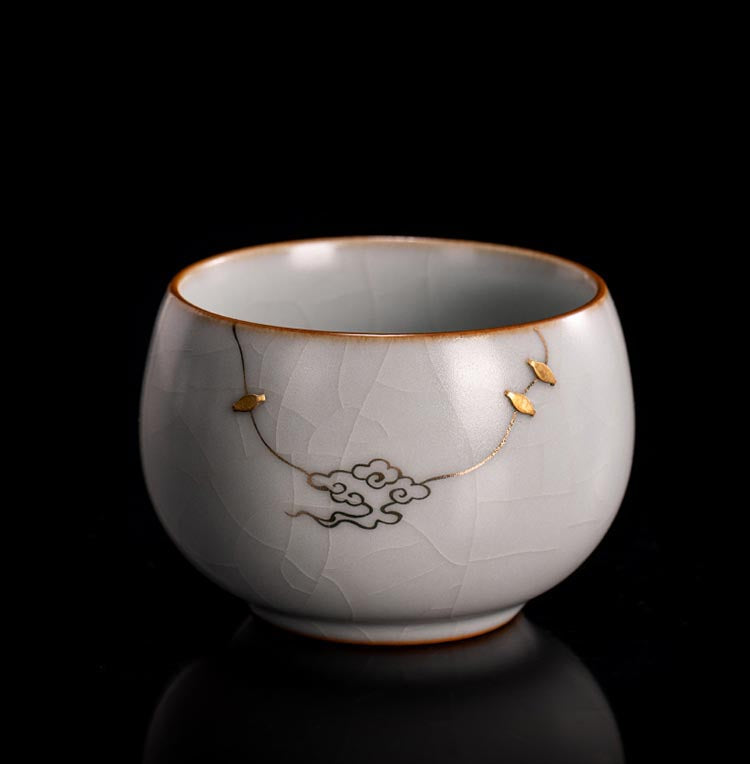
In Chinese porcelain, blue usually means cobalt under a clear glaze. The color sits beneath the surface, not on top of it. When it is done well, the blue has depth, almost a softness at the edges where the brush slowed down or where the pigment gathered slightly in a curve. Gold is different. It rests on the surface, often added after the first firing and fixed in a lower-temperature firing. You can feel it with your fingertip if you run it gently along the rim. It is not thick, but it interrupts the smoothness of the glaze in a subtle way.
When I handle a blue and gold gaiwan, the first thing I pay attention to is not the pattern but the weight of the lid. Porcelain needs to be thin enough to transmit heat quickly but not so thin that it feels fragile. With gongfu brewing, you are holding that lid against the bowl while pouring, sometimes with steam pushing up against your fingers. If the rim has a line of gold, you notice whether it has been applied evenly. A sloppy gilded rim feels uneven against the skin. A well-applied one is almost seamless, just a faint warmth where the metal catches light.
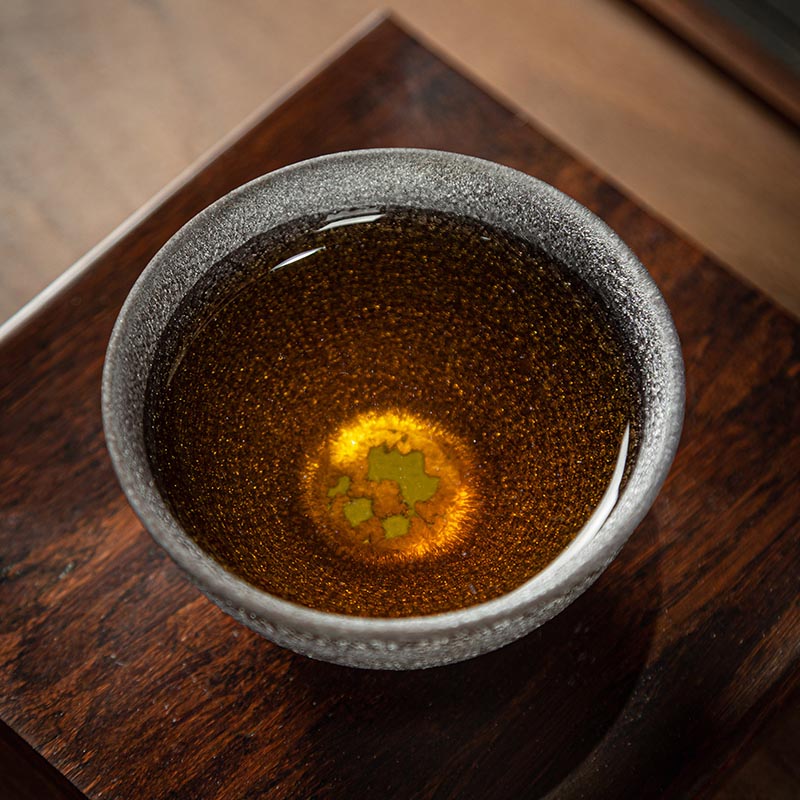
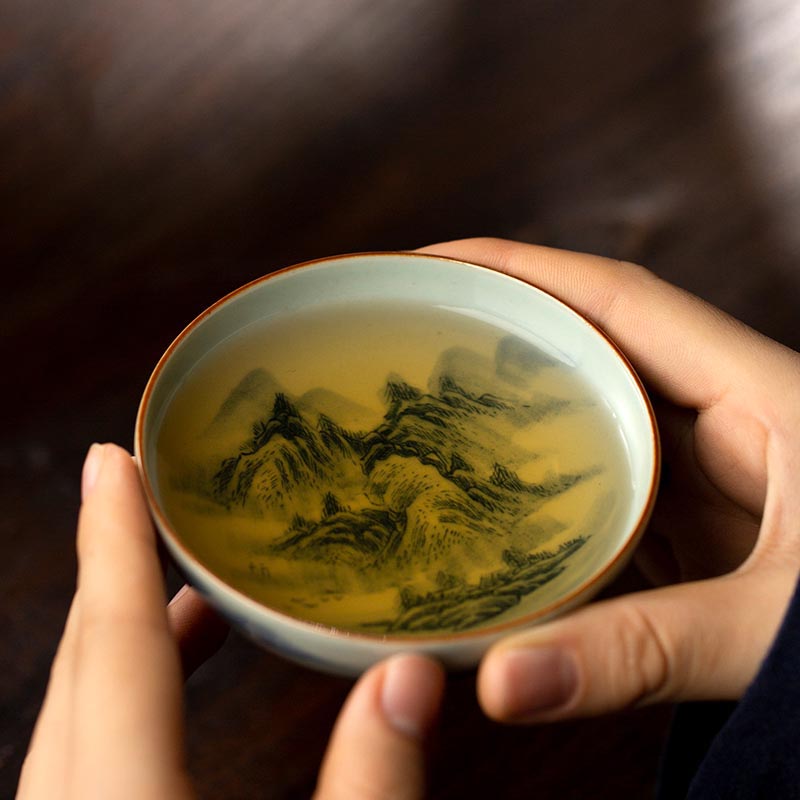
Gold at the rim changes the way light gathers in tea. With pale oolong or a young sheng puer, the liquor is clear and reflective. As you tilt the cup, the surface of the tea mirrors the gold edge in a thin crescent. It is not dramatic, but it frames the color of the infusion. Blue on the outside cools the overall impression. The liquor appears warmer by contrast. This is something you only really notice after many sessions, when you switch back to plain white porcelain and realize how neutral it feels.
A common concern with gold is durability. If the set is meant for daily use, you will wash it often. Strong scrubbing and abrasive sponges will wear down gilding over time. In practice, I rinse porcelain tea ware with hot water immediately after use. Tea stains cling more to unglazed clay than to glazed porcelain, and a smooth glaze releases them easily. Gold detailing does not complicate cleaning as long as you are not treating it like a kitchen pot. Over years, though, the gold can soften at the edges. Some people dislike that. I do not. A slightly worn rim tells you the cups have been lifted and set down thousands of times.
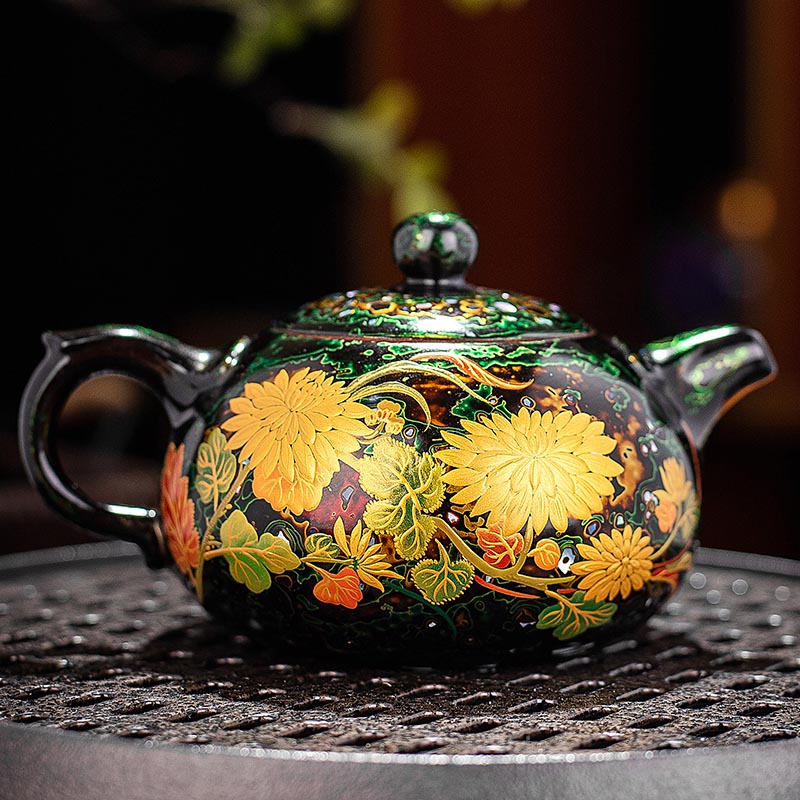
The craftsmanship shows most clearly in the small alignments. On a teapot, the spout and handle should form a straight line. When you tilt the pot, the stream should be clean, without dribbling back along the underside of the spout. Blue and gold decoration sometimes distracts from these fundamentals. I have seen heavily ornamented pots that pour poorly, the glaze thick around the spout opening, breaking the flow. On a well-made piece, the decoration follows the form. Blue lines might echo the curve of the belly. A thin gold band might sit just above the foot ring, emphasizing lift without adding visual weight.
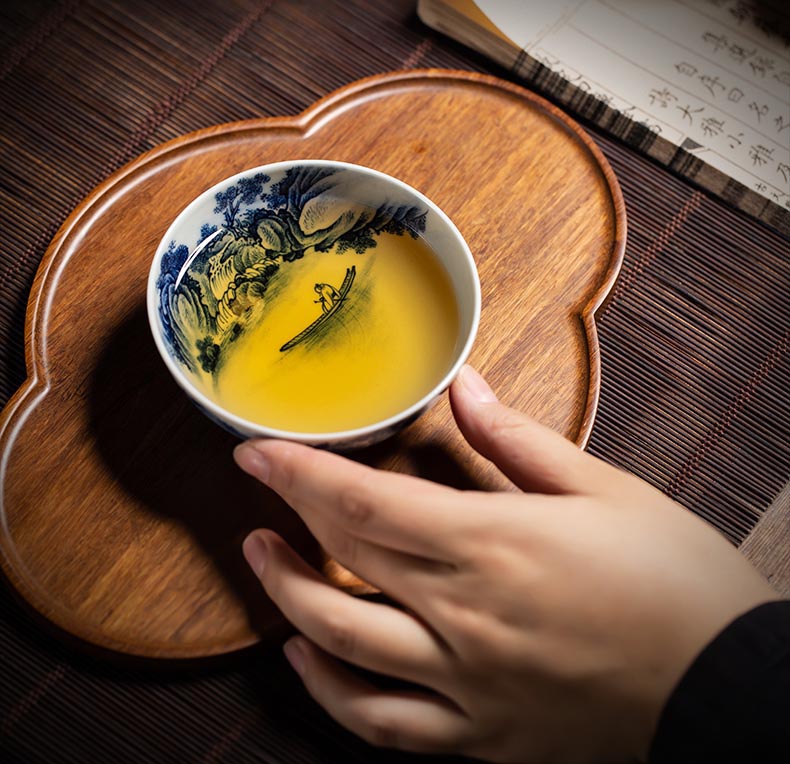
Porcelain with cobalt decoration often has a faint pooling of glaze where the blue is densest. Hold the cup under soft light and turn it slowly. You can see how the glaze thickens slightly over the brushwork. It creates a gentle lensing effect. This is different from printed patterns, which sit flatter and more uniform. Hand-painted work carries tiny irregularities. A petal slightly off-center. A line that grows thinner at the end of a stroke. These are not flaws. They give the eye a place to rest.
In a tea gathering, a blue and gold set changes the mood subtly. White porcelain is quiet and nearly invisible. Yixing clay draws attention to the pot itself, especially as it darkens with use. Blue and gold sits somewhere between. It does not absorb tea oils like unglazed clay, so it will not develop that deepened sheen from repeated brewing. Instead, its change over time comes from handling. The gold dulls slightly. The glaze picks up faint micro-scratches from stacking and rinsing. The foot ring may gather a soft gray where it meets the tea tray.
I often pair a blue and gold gaiwan with simple cups, sometimes even plain white ones, to avoid visual noise. If every piece carries strong decoration, the table feels crowded. Gongfu brewing is already a sequence of movements: warming the ware, adding leaves, the first quick infusion, the pour into a fairness pitcher, then into cups. Too much pattern competes with the rhythm of those gestures. A single blue and gold focal piece can anchor the set without overwhelming it.
There is also the question of heat. Porcelain loses heat faster than thick clay. For green tea or lightly oxidized oolong, that is an advantage. The walls cool quickly between infusions. With darker teas, you might need to work a little faster or preheat more carefully. Blue and gold decoration does not change the thermal behavior, but visually it can suggest a kind of formality that makes people hesitate to use it for everyday brewing. I think that is a mistake. Porcelain was made to be used. Even pieces with gilding were part of a living table, not just a cabinet.
What I appreciate most in a blue and gold tea set is restraint. A deep, even cobalt. Gold that is fine, not thick. Proportions that feel balanced when you lift the pot, when you rest the lid slightly ajar to let steam escape, when you stack the cups after rinsing. After enough sessions, the decoration recedes and what remains is the feel of the rim against your lip, the steadiness of the pour, the way the blue surface holds the afternoon light while the tea cools just enough to drink.