Earthenware Teapots Feel Better and Brew Richer Tea Every Time
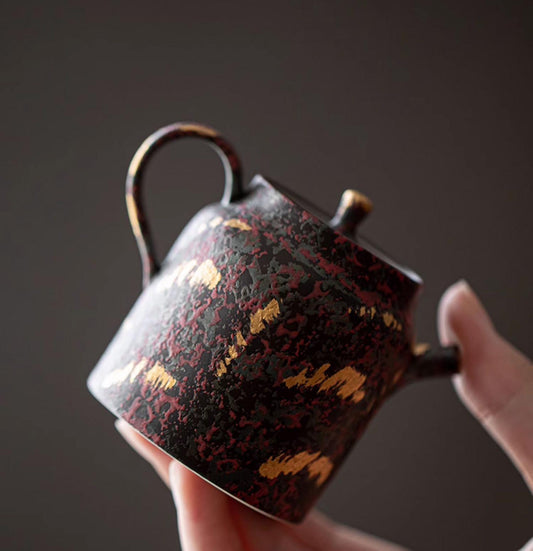
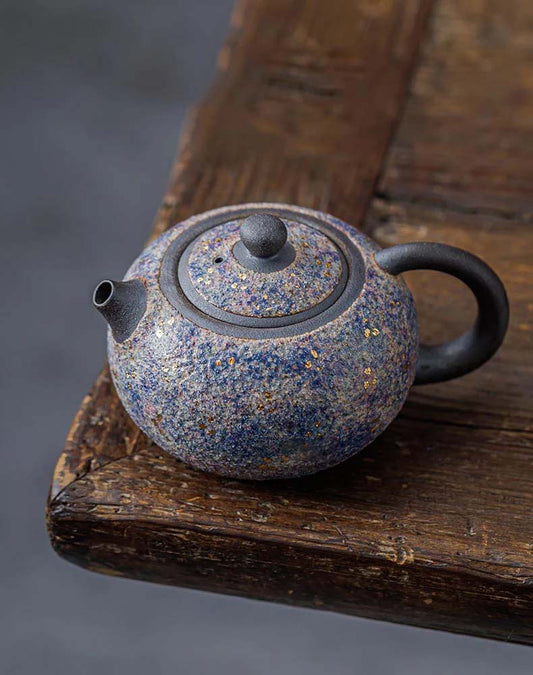
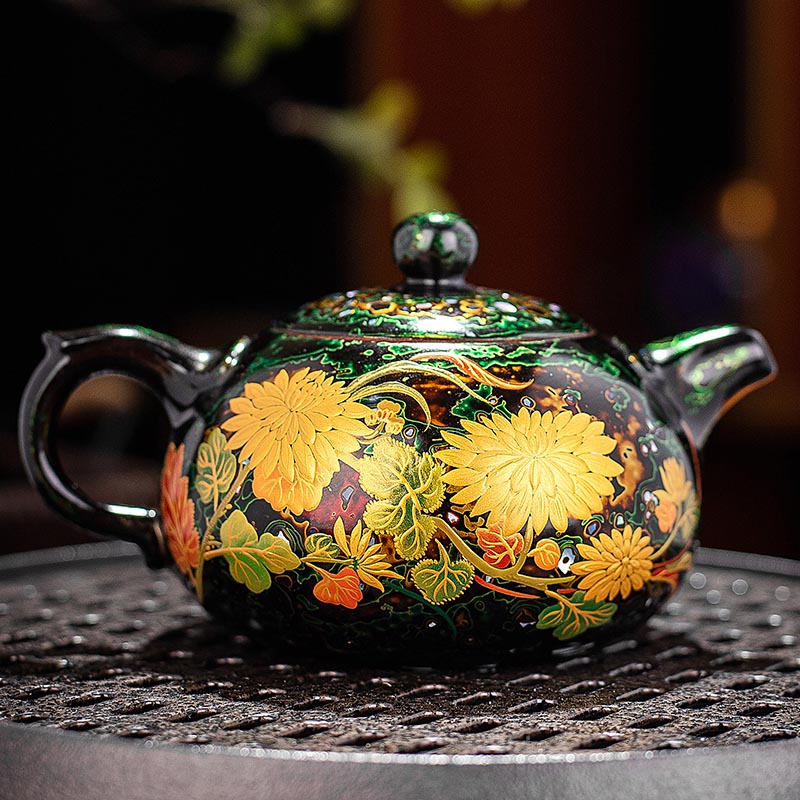
An earthenware teapot feels different in the hand before you even brew with it. The surface is usually dry and matte, sometimes faintly sandy, sometimes smooth but not slick like glaze. Your fingers register that difference right away. It is not decorative texture. It is clay left honest.
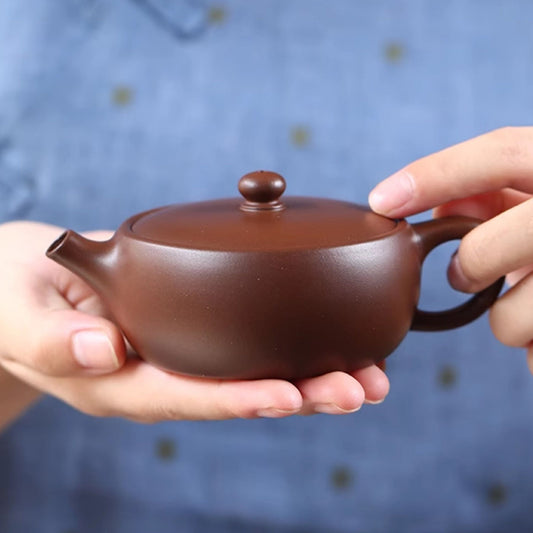
Most people who come to Chinese tea through porcelain are surprised by how small many earthenware pots are. A Yixing pot, for example, often holds just enough for a few concentrated infusions in gongfu brewing. When you fill it, the weight shifts quickly. A good one settles into the palm so that the handle does not pull backward and the spout does not dip forward. The balance matters because you will tilt it dozens of times in a session. If the handle is too tight, your knuckles brush the hot body. If it is too round, your fingers slip slightly when steam dampens your skin. These are small things, but they become very clear after the fourth or fifth pour.
Unglazed clay behaves differently from porcelain. It holds heat in a steadier way. When you rinse the pot with boiling water, the warmth seeps through the walls and lingers. During brewing, that retained heat coaxes out body from oolong or aged puer in a way that feels rounder, less sharp. It is not dramatic or mystical. It is a matter of thermal mass and porosity. The clay breathes a little. Over time, it absorbs trace oils from the tea. The surface deepens in tone, especially where your thumb rests on the lid knob and where your palm cups the belly. After years of use, a well-cared-for pot develops a low sheen that no glaze could replicate. It comes from repeated handling and careful rinsing, not from polishing for display.
The lid fit is one of the first things I check when I pick up an earthenware pot. Set the lid in place and turn it gently. It should seat with a soft, precise contact, not wobble loosely and not grind. When you pour and place a finger over the air hole, the stream should stop cleanly. That tells you the fit is tight and the internal pressure is controlled. A good spout pours in a smooth, centered arc. The stream should gather quickly without dribbling down the tip. In gongfu brewing, you often empty the pot in one decisive motion. If the pour hesitates, the last seconds of extraction become uneven. You taste that in the cup.
Inside, the filter can be a simple single hole, a few drilled holes, or a ball filter shaped from the same clay. Each has its own maintenance habits. Fine holes can clog if you break up leaves too aggressively. A quick rinse and a soft brush keep things clear, but you have to pay attention. Earthenware rewards consistency. Many people dedicate one pot to one category of tea. Not because of superstition, but because clay does retain a trace memory. Brew roasted oolong in it for years and then switch to a delicate green, and you will notice a faint echo that does not belong. The solution is simple. Choose a direction and let the pot follow it.
There is also the matter of proportion. Some earthenware pots are squat and rounded, others taller and more cylindrical. A flatter, wider body allows leaves to open and spread. That suits twisted oolongs that unfurl dramatically. A taller, narrower form can concentrate heat in a way that benefits certain darker teas. The wall thickness plays a role too. Thicker walls hold heat longer but make the pot heavier and slower to respond. Thinner walls feel lively but can cool more quickly in a drafty room. You learn these traits by brewing the same tea in different vessels and paying attention to what changes.
Earthenware does demand a bit more care. You do not scrub it with soap. You do not leave damp leaves inside overnight. After a session, I tip out the leaves, rinse with hot water, and let the pot dry with the lid slightly ajar. Over time, the interior stains to a deep brown. That is normal. It is the record of use. A pot that sits unused on a shelf stays pale and dry-looking, almost shy. One that is in regular rotation grows darker and more confident in appearance.
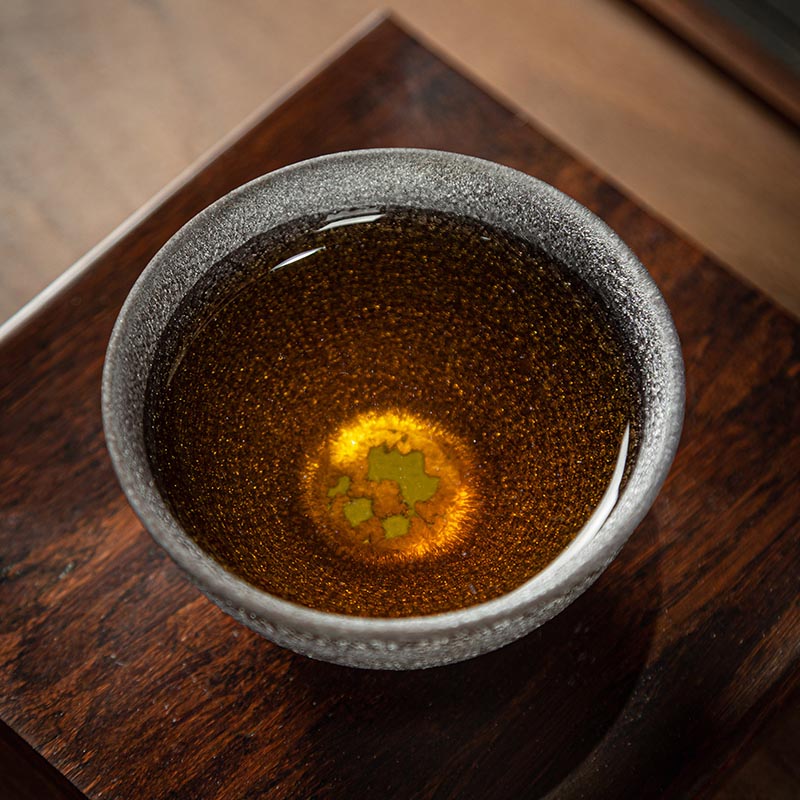
In a tea gathering, an earthenware teapot has a quiet presence. It does not flash like bright porcelain or catch the light with glaze. Instead, it anchors the table. The fairness pitcher might be glass or porcelain, the cups thin and white to show the liquor clearly, but the clay pot sits at the center, absorbing heat, passing liquid from leaf to cup. When you lift the lid and the first steam rises, the scent gathers inside the clay chamber before escaping. That brief pause seems to concentrate the aroma.
I have pots that I admire for their form and others that I reach for without thinking. The second kind are not always the most visually striking. They are the ones whose lids settle with a soft, familiar sound, whose spouts pour cleanly even when I am distracted in conversation, whose handles fit my grip without adjustment. After enough sessions, the movements become automatic. Rinse, load the leaves, quick wash, first infusion. The pot warms, darkens slightly with moisture, and then dries back to matte as the session winds down.
An earthenware teapot is not inherently superior to porcelain or glass. It is simply more involved. It responds to heat, to tea, to touch. It records habits. If you brew carelessly, it shows. If you brew attentively, it becomes easier to use over time. That quiet collaboration between clay and repeated practice is what keeps me coming back to it.