Understanding Yixing Teapot Maker’s Marks
If you turn a Yixing teapot over in your hands, one of the first things you might notice is a small stamped seal pressed into the clay. Sometimes it sits neatly on the base. Sometimes you’ll find another under the lid, or even inside the lid itself. These maker’s marks are a quiet but important part of Yixing tradition, offering small clues about the person who shaped the pot and the way it was made.
In the world of gongfu tea brewing, the teapot is more than just a container for loose leaves. It becomes a familiar tool in daily tea sessions, developing a relationship with the tea it brews. Yixing clay, left unglazed, slowly absorbs trace oils from the tea. Over time the surface gains a soft sheen, and the pot begins to feel almost alive in the hand. Because of this intimacy between teapot and tea, knowing who made the pot has long mattered to collectors and serious tea drinkers.
The maker’s mark serves partly as a signature and partly as a workshop tradition. Many Yixing teapots carry a square or rectangular seal carved in Chinese characters and pressed into the damp clay before firing. These seals often show the potter’s name, though sometimes they represent a studio name or a traditional mark used by apprentices within a workshop. On fully handmade pots, you may see one seal on the bottom and a smaller one hidden under the lid, confirming the lid and body were shaped as a matched pair.
For tea drinkers who enjoy examining their tea ware during a quiet session, these details become part of the ritual. As the kettle cools and the fairness pitcher empties, it’s natural to turn the pot over and study the base seal. The characters might be crisp or slightly softened by the clay’s texture. Sometimes the impression is deep and confident; other times it’s lighter, suggesting a careful hand pressing the stamp into the damp zisha clay.
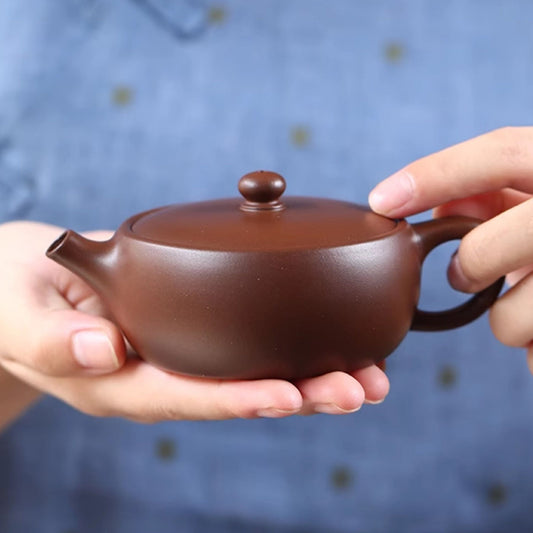
Still, the mark alone rarely tells the whole story. A well-made Yixing teapot reveals itself just as clearly through use. The lid sits neatly and rotates with a gentle, sandy sound. The spout pours in a clean, steady stream into porcelain cups waiting on the tea tray. The balance feels right when you tilt it during a fast gongfu infusion. These practical qualities are often more meaningful to tea drinkers than the seal itself.
Over time, the maker’s mark simply becomes another small detail you grow familiar with—like the curve of the handle or the way the clay warms in your palm during a long afternoon of brewing tea. :::