Yixing Teapot Marks What They Reveal About Craft Clay and the Quiet Ritual of Tea
Yixing Teapot Marks What They Reveal About Craft Clay and the Quiet Ritual of Tea
:::writing If you turn a Yixing teapot over in your hand, you’ll usually find a small impression pressed into the clay. Sometimes it sits neatly on the base. Sometimes it appears inside the lid, or tucked beneath the handle. This is the Yixing teapot mark — a small detail, but one that carries a surprising amount of meaning.
Most marks identify the maker. Traditionally, Yixing teapots are handmade from zisha clay in Jiangsu province, and potters often stamp their name or studio seal into the soft clay before firing. The marks are usually carved into small seals, leaving crisp characters in relief or recessed into the surface. On older pieces, you might see the same mark repeated under the lid and on the base, a quiet signature confirming the teapot’s origin.
But the mark is only part of the story. In real tea practice, what matters most is how the pot behaves during brewing.
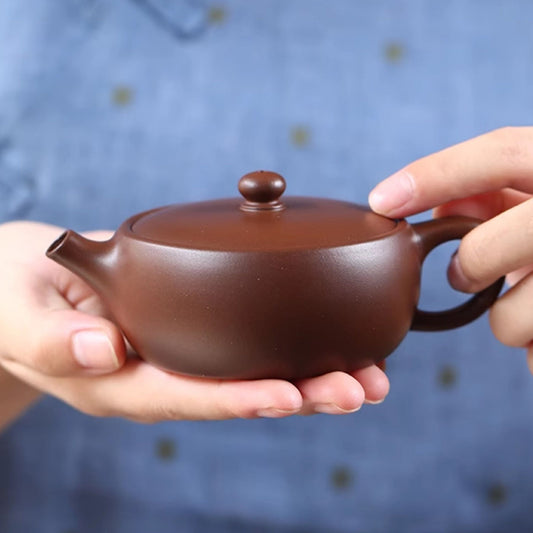
A good Yixing teapot feels balanced the moment you lift it from the tea tray. During gongfu brewing, when loose leaf tea is steeped repeatedly in short infusions, the pot should pour smoothly and stop cleanly. The lid sits snug enough that you can tilt the pot without it slipping, while the spout releases a steady stream into the fairness pitcher, or cha hai, where the tea is gathered before being shared among small cups.
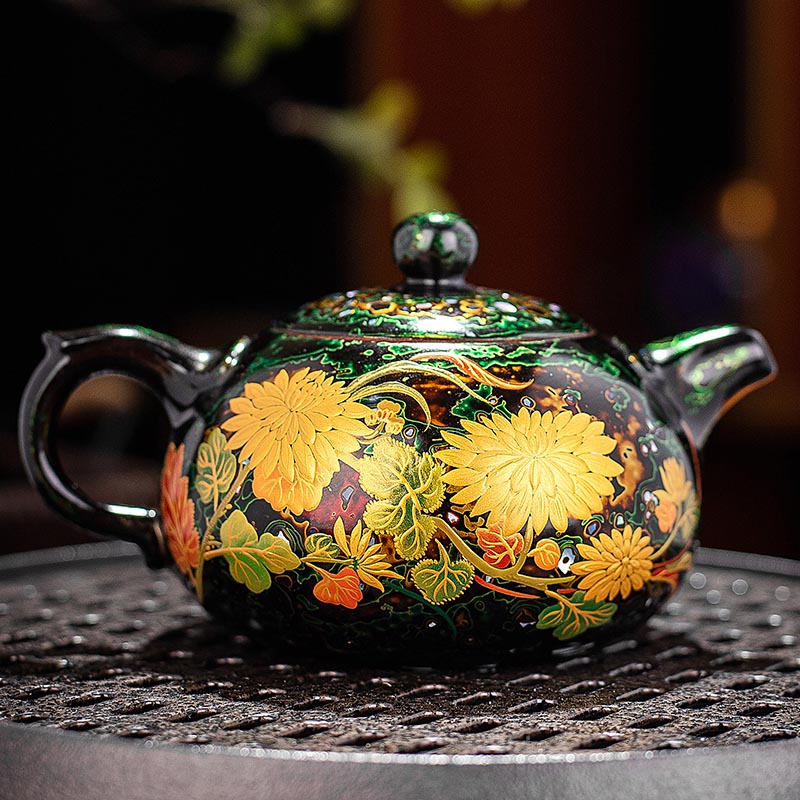
The clay itself plays a role here. Yixing clay is unglazed and slightly porous, gradually absorbing traces of tea over time. Many tea drinkers dedicate a single pot to one style of tea — perhaps a roasted oolong or a dark puer. With regular use, the clay deepens in tone and develops a soft sheen. The teapot begins to feel less like a tool and more like a companion to the daily ritual of brewing.
In this context, the mark on the bottom becomes something more subtle than a label. It’s a reminder that the pot was shaped by hand. The slight rounding of the lid knob, the curve of the handle, the way the spout aligns perfectly with the body — these are decisions made by a craftsperson long before the pot ever reached a tea table.
During a quiet tea session, these details tend to reveal themselves slowly. As water warms the clay and steam drifts across the tea tray, you might turn the teapot over for a moment between infusions, tracing the seal with your finger. The characters may be small, sometimes hard to read unless you know Chinese, but they still carry a sense of authorship — a maker leaving a quiet signature on an object meant for daily use.
Around it gather the other pieces of the tea set: thin porcelain cups that cool the tea quickly, a fairness pitcher catching the amber stream from the spout, a tea caddy holding tightly rolled leaves waiting for the next infusion. The teapot sits at the center, its mark hidden most of the time, doing exactly what it was made to do.
And after many sessions, when the clay has grown darker and smoother from years of pouring tea, that small seal on the bottom begins to feel less like a brand and more like a quiet acknowledgment between the potter, the pot, and the person who keeps brewing tea with it. :::