The Unique Qualities and Craftsmanship of Antique Japanese Teapots
An antique Japanese teapot rarely behaves the way a modern factory pot does. The first thing I notice is usually the lid. It does not just sit there. It settles with a soft ceramic click, sometimes with the faintest whisper of air escaping as it seals. On an older kyusu, especially one with a side handle, the lid fit can tell you immediately whether it was carefully made or merely decorative. A good one stays steady when you tilt to pour, even when the leaves swell and push against the built-in clay filter.
Most antique Japanese teapots that find their way into Western collections are side-handled kyusu, often from Tokoname. The clay tends to be iron-rich, fired to a warm red or brown that darkens with use. In the hand, that clay feels dry and fine, almost dusty at first touch, but after years of brewing it develops a soft sheen where fingers naturally rest. It is not a glossy glaze. It is simply the result of oil from skin, steam, and repeated wiping. If you brew green tea in it regularly, the interior may take on a faint tea scent that never fully leaves.
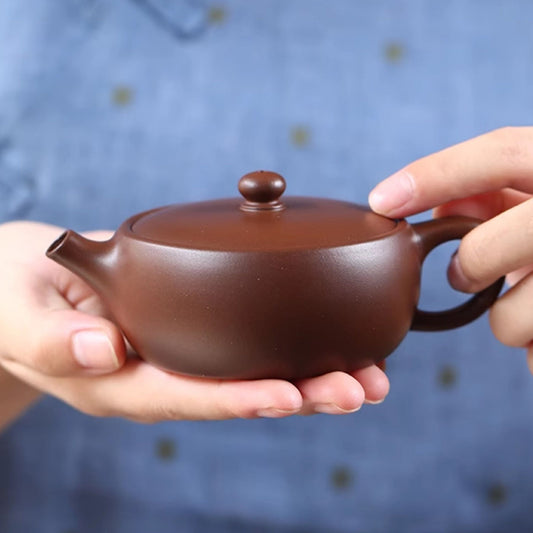
For someone used to Chinese gongfu teapots, especially Yixing, the balance of a kyusu can feel slightly surprising. The side handle shifts the center of gravity. When you lift it properly, with your thumb anchoring the top of the handle and your fingers wrapped underneath, the pot feels lighter than it looks. The pour can be very quick, almost sharp. Many kyusu are designed for Japanese green teas that need a decisive decant to avoid over-extraction. When the spout alignment is good, the stream runs clean and narrow, stopping without a lingering drip. If the pot has been well kept, the cut of the spout remains crisp. If it has been chipped or worn down, you see it immediately in the way the last drops cling and fall.
Antique pieces often show small practical compromises. A tiny wobble in the lid. A hairline crack that has been stabilized. A metal staple repair, if it is truly old, can be surprisingly strong and oddly beautiful. I have seen kyusu where the repair is more interesting than the original surface. They are not museum pieces. They were used, probably daily. That shows in the foot ring, slightly darkened from contact with a damp tea tray, and in the faint scratches where a lid was set down again and again.
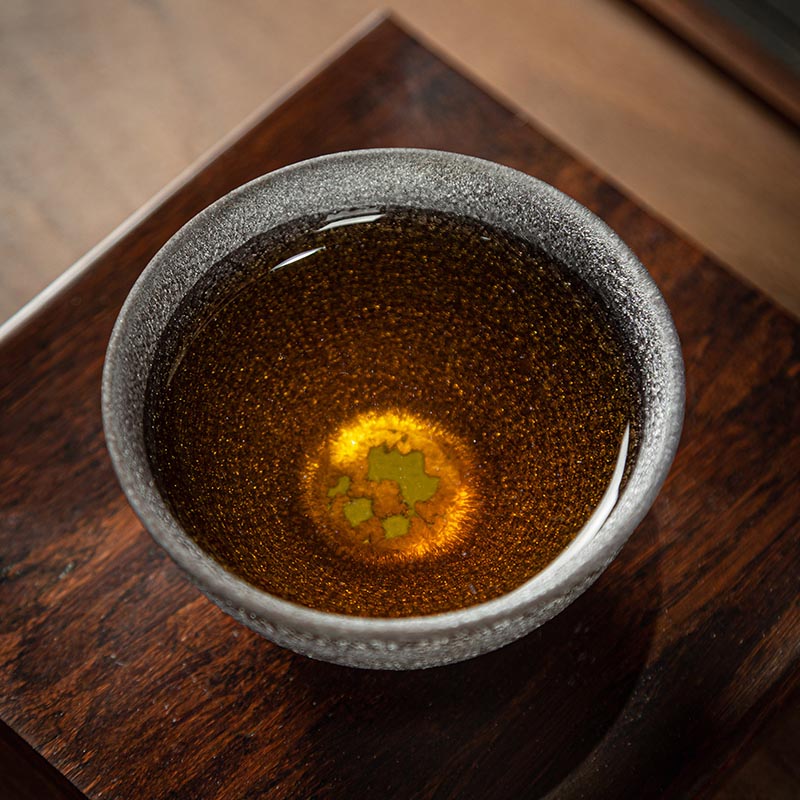
For a Chinese tea drinker, using an antique Japanese teapot raises an interesting question about brewing style. Gongfu sessions with oolong or pu’er demand small volumes and multiple quick infusions. A kyusu can handle that, but it is usually a bit larger and built for fewer, more measured steeps. I sometimes use an older kyusu for lighter oolongs, pouring into a fairness pitcher before distributing to small porcelain cups. The clay softens the edges slightly, much like a well-seasoned Yixing pot does, though in a different way. The effect is subtle. It is more about mouthfeel than aroma.
There is also something to be said for how the pot sits during preparation. Before water even touches the leaves, arranging the tools changes your attention. A kyusu placed next to a gaiwan or a Yixing pot shifts the visual rhythm of the tray. The horizontal line of the side handle, the low profile of the body, the often slightly flattened lid knob, they alter the landscape of the brewing space. You become aware of angles rather than height.
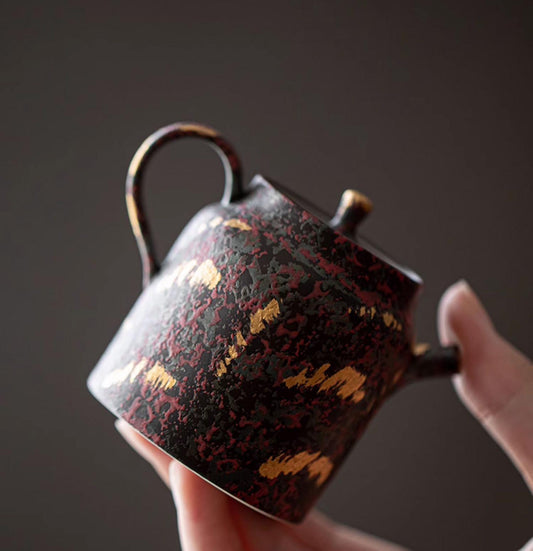
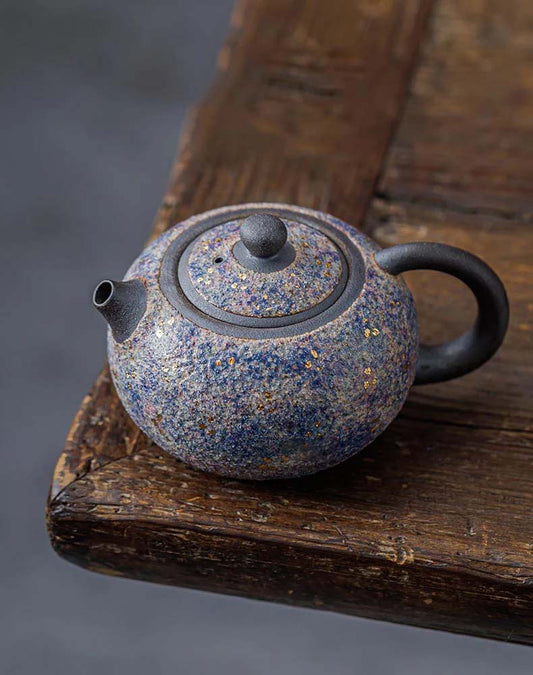
Antique glaze work, when present, can be understated. Some Japanese teapots are partially glazed, with ash deposits that have melted unpredictably across the surface. Under soft light, those areas can look almost damp, even when dry. Running a finger across the transition from bare clay to glaze, you feel a change in temperature and texture. During brewing, the glazed areas cool faster, while the unglazed clay retains warmth a little longer. It is a small detail, but when you pick up the pot repeatedly in one session, you notice it.
Not every antique Japanese teapot deserves to be used. Some are too fragile. Others were made as decorative export pieces and never poured particularly well to begin with. The difference becomes clear the first time you test them with hot water. Does the lid rattle? Does the stream break into droplets? Does the handle grow uncomfortably hot? An object can be old and still be poorly suited to tea.
But when you find one that works, truly works, it does not feel antique in the romantic sense. It feels present. You tilt it, the tea flows cleanly, and the leaves inside shift with a soft, muffled sound. After the last infusion, you remove the lid and let the pot air dry completely. The interior darkens for a moment, then slowly lightens as moisture evaporates. There is no performance to it.
Over time, the pot becomes less about Japan or China and more about your own habits. How full you fill it. How quickly you pour. Whether you wipe it dry immediately or let it rest. The clay records those choices in small ways. The next time you lift it, you feel where your thumb has polished the surface slightly smoother than the rest.
That quiet accumulation of use matters more to me than its age. The antique quality is interesting, but the real test is simple. Does it pour well? Does it make you want to brew another round? If the answer is yes, it has earned its place on the tea table, regardless of where it was first fired.