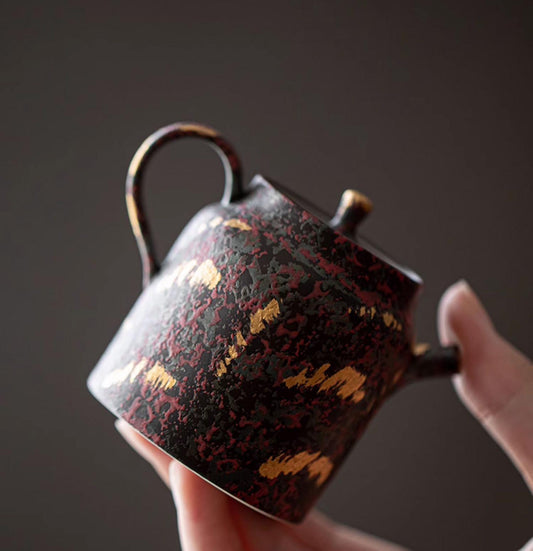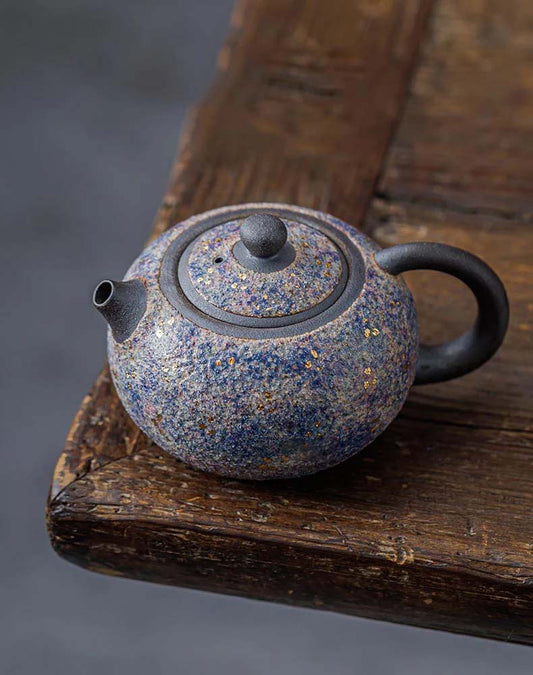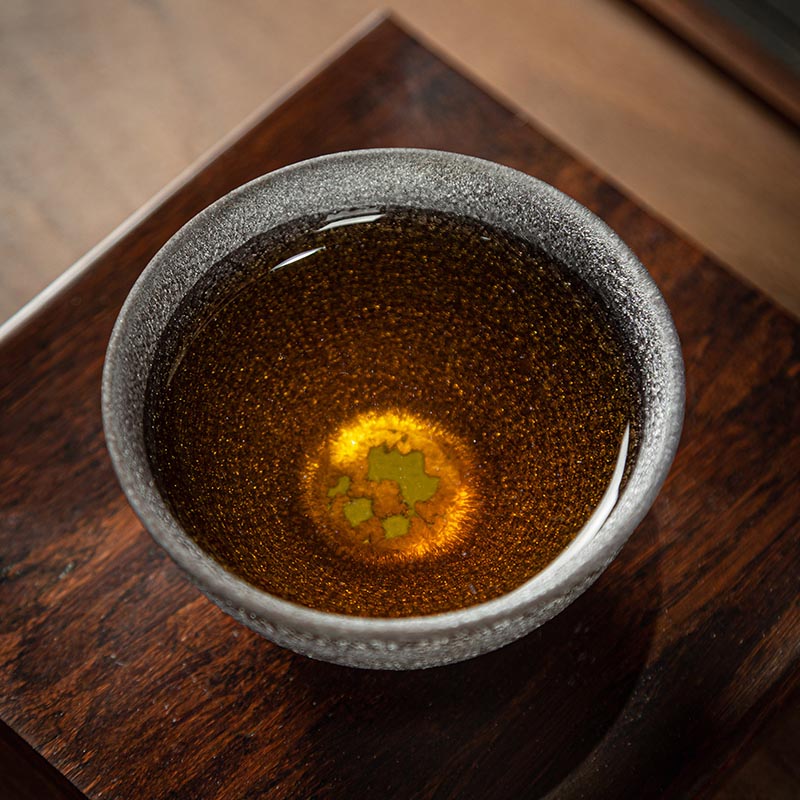
A Yixing Teapot’s Pour and What It Reveals About Quality and Fit
The first thing I notice with a Yixing teapot is not the clay color or the shape of the knob. It is the pour. Before I think about patina or clay type or which tea it suits, I fill it with hot water and tip it over a fairness pitcher. The way the stream forms tells me almost everything.
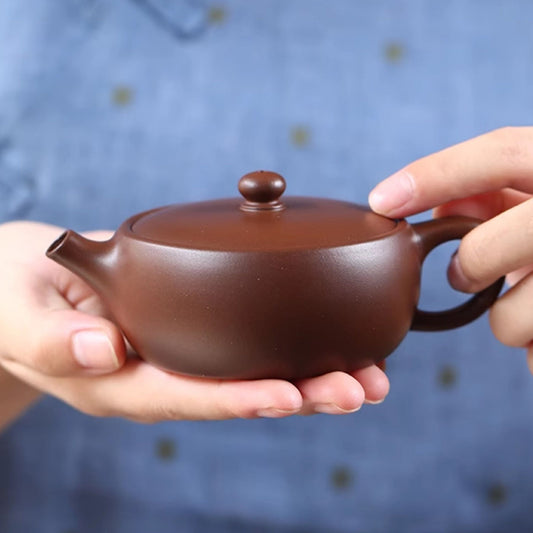
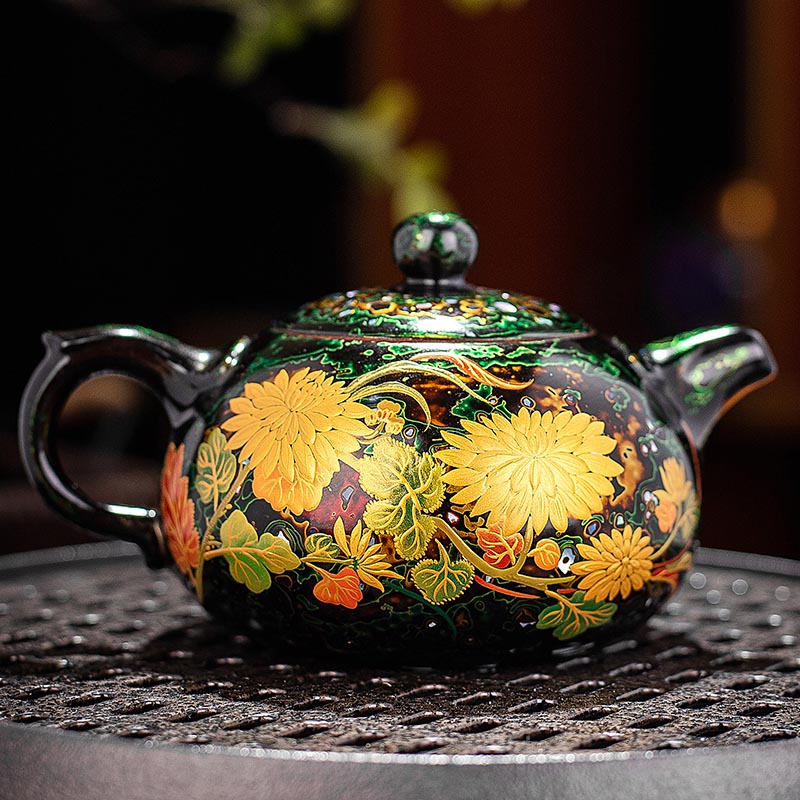
A good Yixing pot pours in a clean, steady line that feels almost heavier than water. The stream should hold together for a few inches before it breaks. When the spout is well formed and properly aligned with the body, the water leaves decisively, without hesitation, without dribbling down the belly of the pot. If I need to angle my wrist awkwardly to keep it from spilling, something is off in the balance. A small teapot used for gongfu brewing is lifted dozens of times in a session. The handle needs to sit naturally between the fingers, with enough room for heat but not so much that the pot wobbles.
With Yixing clay, the lid fit matters just as much as the spout. Many pots are made with a tight, almost suctioned lid. When you cover the small air hole on top of the knob with a finger and tilt the pot, the stream should slow or stop. Release the hole, and it flows again. That small interaction tells you about the precision of the fit. It also changes how you brew. When pouring young sheng puer or a rolled oolong, I sometimes control the flow with my finger, letting the liquor out in a controlled rush so the leaves are not left sitting in water longer than intended.
The sound of the lid is another quiet detail. On some handmade pots, the lid settles into place with a soft ceramic click that is slightly dull because the clay is unglazed and porous. It is not the bright ring of porcelain. When the pot is new, the lid may feel almost dry against the gallery, with a faint friction as you turn it. After months of use, especially if dedicated to one tea, the contact surfaces become smoother. Oils from the tea and from your hands polish the clay. The movement becomes quieter, easier. That change is subtle, but it is part of living with the pot rather than keeping it on a shelf.
The pour also depends on the wall thickness and the clay itself. Yixing clay holds heat differently from thin porcelain. A slightly thicker body stabilizes temperature during short infusions, especially for roasted oolong or aged puer. When you tip the pot, you feel that stored warmth in your fingers. It is not scorching, but it is present. If the walls are too thick, the pot can feel heavy and slow, and the pour may lag. Too thin, and the temperature drops quickly, making the brewing less consistent. There is a middle ground where the pot feels compact and responsive.
Spout design varies more than many people expect. Some are straight and sharp at the lip, producing a narrow, precise stream. Others have a slightly flared opening that creates a rounder flow. For gongfu brewing, I prefer a spout that empties the pot quickly. In small sessions, each infusion might last only a few seconds. When I tip the pot, I want the liquor out immediately, not trickling while the leaves continue to steep. A good Yixing teapot can empty almost completely with a single confident tilt, leaving only a few drops inside.
Inside, the filter matters too. Some pots use a simple single hole. Others have a ball filter or a row of fine perforations built into the clay at the base of the spout. With twisted oolongs or broken leaf teas, a finer filter prevents clogging and keeps the stream clean. But very fine filters can slow the pour if the leaves press against them. It becomes a small choreography between leaf size, water volume, and the angle of the tilt. Over time you adjust without thinking.
There is also the question of drips. A poorly finished spout lip will cling to water, sending a thin line down the outside of the pot after each pour. On a tea tray, this is manageable, but it changes the feeling of use. A crisp, well cut lip lets the last drop fall cleanly. After pouring, I give the pot a small, practiced flick of the wrist to snap the stream. When the pot is well made, that motion feels satisfying. When it is not, you end up wiping the belly with a tea towel more than you would like.
In a tea gathering, the pour becomes part of the rhythm of the table. The host lifts the pot, tips, empties into the fairness pitcher, then distributes into small cups. The guests watch the stream without commenting on it, but everyone notices when it is smooth. A hesitant pour breaks the flow of the session. A clean, confident one disappears into the sequence of movements.
Over years of use, a Yixing teapot changes slightly. The exterior may develop a soft sheen where it is most often handled. The clay darkens a touch from repeated rinsing with tea. None of this improves the pour directly, but it changes how the pot feels in the hand. The grip becomes more familiar. You know exactly how far to tilt for a full emptying. You sense the weight shift as the liquid leaves.
People sometimes focus heavily on clay types and firing temperatures, and those do matter. But when I evaluate a Yixing teapot for daily use, I return to the pour. Does it start cleanly? Does it stop when I ask it to? Does it empty quickly enough for the tea I drink? Can I hold it comfortably through multiple infusions without strain? These are practical questions, and they are the ones that determine whether a pot stays in rotation or drifts to the back of the shelf.
In the end, the pour is where craftsmanship meets brewing. It is the moment when form proves itself under hot water. A Yixing teapot that pours well does not draw attention to itself. It simply does its job, infusion after infusion, until the motion of lifting and tilting feels as natural as breathing.