China Teapot from Dunelm vs. Traditional Gongfu Pots Design and Brewing Style
When someone mentions a “china teapot” from a place like Dunelm, I usually picture a light porcelain pot with a bright glaze, maybe a floral pattern, something made for the center of a breakfast table. There is nothing wrong with that kind of teapot. It holds heat reasonably well, it looks cheerful, and it pours several cups at once. But it belongs to a different brewing logic than the small, concentrated world of Chinese gongfu tea.
Most Western china teapots are designed for volume. The body is rounded and generous, often 600 milliliters or more. You add a spoonful or two of leaf, fill it with hot water, and let it sit. The spout is wide to accommodate a steady stream, and the handle is shaped so you can lift a full, heavy pot without straining your wrist. It is practical in its own way. The lid may rattle slightly when you pour, and if you tip too quickly, a thin line of tea can escape from the lid seam and run down the body. These are small design compromises in a pot meant for ease and sociability rather than precision.
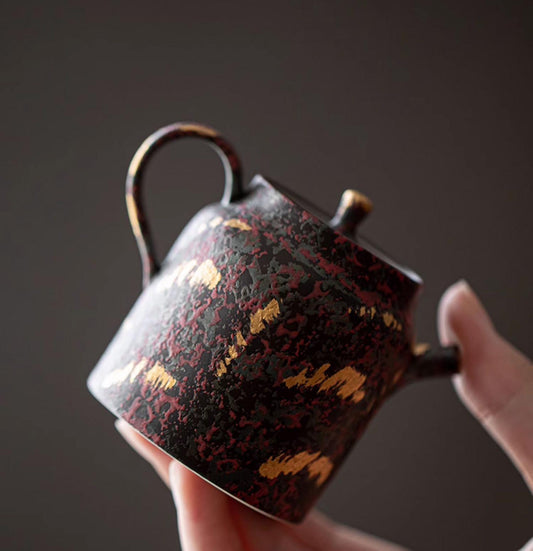
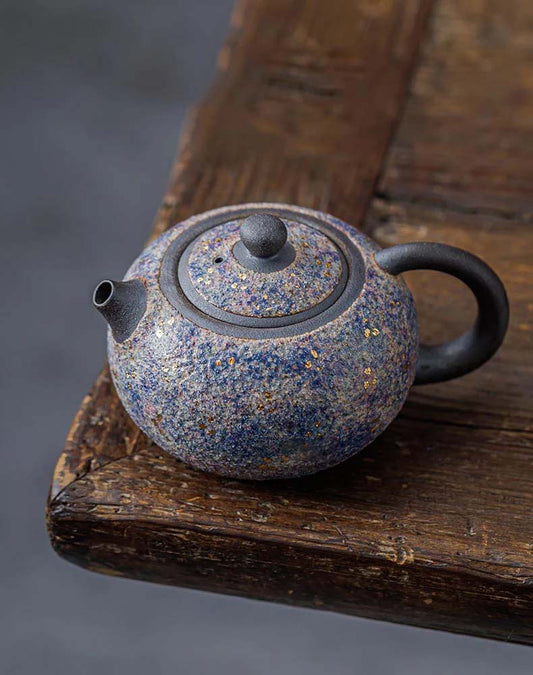
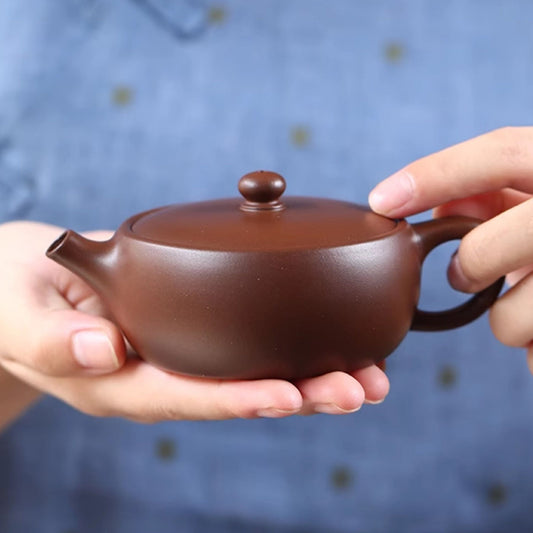
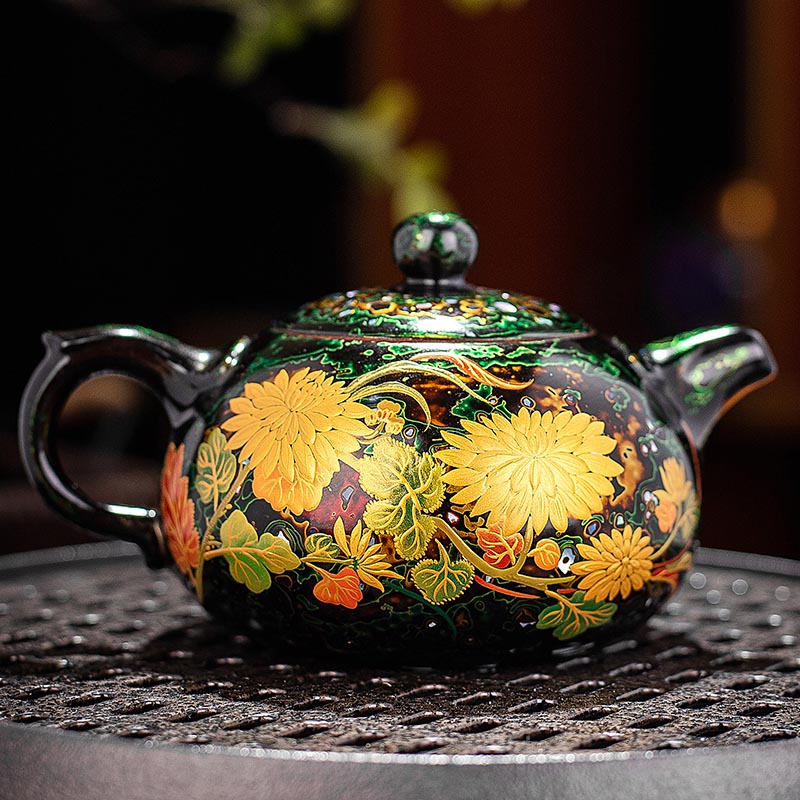
In contrast, a traditional Chinese teapot, especially one used for gongfu brewing, is usually small enough to sit comfortably in one hand. Many hold less than 200 milliliters. The proportions are tighter. The spout aligns cleanly with the handle and the knob on the lid, forming a straight line when you look at it in profile. When you pour, the stream should be focused and continuous, not sputtering, not dribbling at the end. A well-fitted lid barely shifts under your thumb, and when you tilt the pot back upright, there is a soft, contained sound as the last drops fall inside.
Material changes everything. The glossy glazed porcelain of a typical china teapot is smooth and non-porous. It does not absorb aroma. You can brew black tea in the morning, rinse it, and brew a green tea later without much carryover. That flexibility is useful in a kitchen where one pot serves many purposes.
Unglazed Yixing clay behaves differently. The surface feels dry and faintly textured, almost sandy when new. Over time, repeated brewing and handling give it a muted sheen. It is not shine in the glazed sense, but a soft deepening of color where fingers rest and steam rises. The clay retains heat in a steady way and interacts subtly with the tea. That is why many people dedicate one Yixing pot to a single category of tea. It becomes part of a long relationship. You notice how the pour tightens as the leaves open inside, how the body warms quickly in your palm, how the lid seems to settle more securely after years of use.
If you set a large china teapot next to a small Yixing pot on a tea tray, the difference in intention is obvious. One invites you to fill cups generously and linger in conversation without too much attention to timing. The other asks you to stay close. In gongfu brewing, you might infuse for ten or fifteen seconds, then decant fully into a fairness pitcher before pouring into small cups. The pot must empty cleanly. If liquid pools in the spout or drips long after the pour, it throws off the next infusion. These are details that matter when you are brewing the same leaves eight or ten times in a row.
That does not mean a porcelain china teapot has no place in Chinese tea practice. White porcelain, especially when thinly potted, can be excellent for green tea or lightly oxidized oolong. The glaze reflects light into the liquor, letting you see color clearly. If the walls are not too thick, the heat dissipates a little faster, which can help with more delicate leaves. I have used simple porcelain pots that look unassuming on a shelf but feel perfectly balanced when lifted. The handle is just wide enough for two fingers, the spout cuts the stream cleanly, and the lid sits with a slight, reassuring resistance.
What often separates a pot made for display from one made for daily tea is not decoration but proportion and finish. Turn the pot over and look at the foot ring. Is it smooth, or does it scrape slightly against the table? Run a finger along the inside of the spout where it meets the body. Is the glaze even? When you set the lid in place, does it wobble? These are quiet tests. They tell you whether the pot will become part of your routine or remain something you reach for only when guests comment on the pattern.
In the end, a china teapot from a general homeware shop can be a starting point. It can hold good loose leaf tea and offer warmth on an ordinary afternoon. But if your interest deepens and you begin adjusting leaf weight, water temperature, infusion time, you start to feel the limits of a large, multipurpose pot. You may find yourself wanting something smaller, more responsive, something that pours exactly when you ask it to.
The difference shows up in the hand. A big porcelain pot demands a firm grip and a steady wrist. A small clay pot rests against your palm, thumb on the lid knob, fingers curved around the handle, and the movement becomes economical. Lift, tilt, empty, return. After a while, you stop thinking about it. The vessel disappears into the act of brewing, and that is usually when you know you have found the right teapot for the way you actually drink tea.