Teapot Materials: Clay vs. Porcelain for Tea Lovers Guide
Most Chinese teapots are made from clay or porcelain, and the difference between those two materials is not abstract. You feel it the first time you pour.
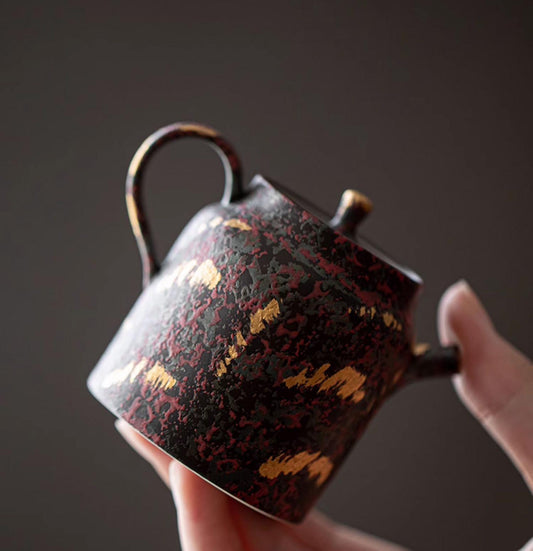
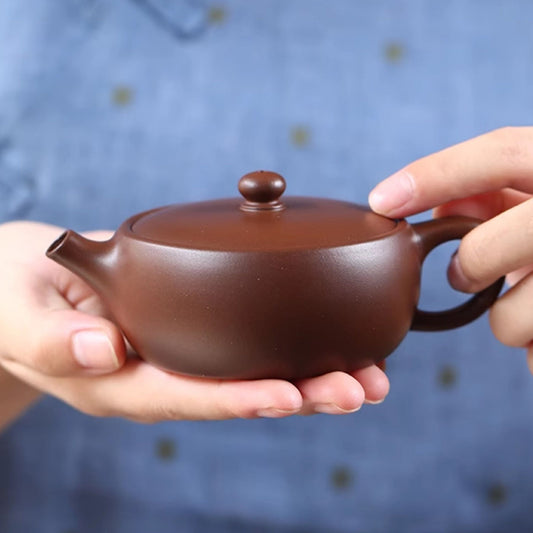
Unglazed clay, especially Yixing clay from Jiangsu, has a dry, almost sandy texture when it is new. It is not rough, but it is not slick either. The surface absorbs a trace of the oils from your hands over time. After months or years of use, the clay develops a soft sheen, not a glaze but a quiet polish from handling and steam. When you lift a small Yixing pot filled with hot water, the heat comes through the walls in a steady, even way. The clay holds temperature well, which matters in gongfu brewing where short infusions depend on stability. Oolong, puer, and some black teas respond particularly well to that retained heat.
The clay is slightly porous. That word gets romanticized, but in practice it means two things. First, the pot will gradually take on the character of the tea brewed in it. If you use one pot consistently for roasted oolong, over time the interior holds a faint scent even when empty and dry. Second, it means you do not wash it with soap. You rinse, you air dry with the lid off, and you let use do the rest. The maintenance becomes part of the rhythm.
A well-made clay teapot shows its quality in small mechanics. The lid should sit securely with minimal wobble. When you tilt the pot and cover the air hole with your finger, the pour should stop cleanly. The stream from the spout should be focused, not dribbling along the underside. In gongfu brewing, where you empty the pot quickly into a fairness pitcher, that control is not decorative. A clean, fast pour keeps the infusion even. If the spout is misaligned by a few degrees, you notice it every time.
Porcelain is different from the moment you touch it. It is smooth, cool, and non-porous. It does not absorb aroma or flavor. If you brew a green tea in a porcelain pot in the morning and a heavily roasted yancha in the afternoon, nothing lingers in the clay because there is no exposed clay. For people who drink many types of tea and do not want to dedicate a pot to each category, porcelain is practical.
The walls of a porcelain pot can be thinner than clay, sometimes surprisingly thin. When you pour boiling water in, the exterior heats quickly, then cools more quickly as well. For delicate green teas or lightly oxidized oolongs, that faster heat loss can actually help. The tea is less likely to stew. You feel the temperature changes directly in your fingers.
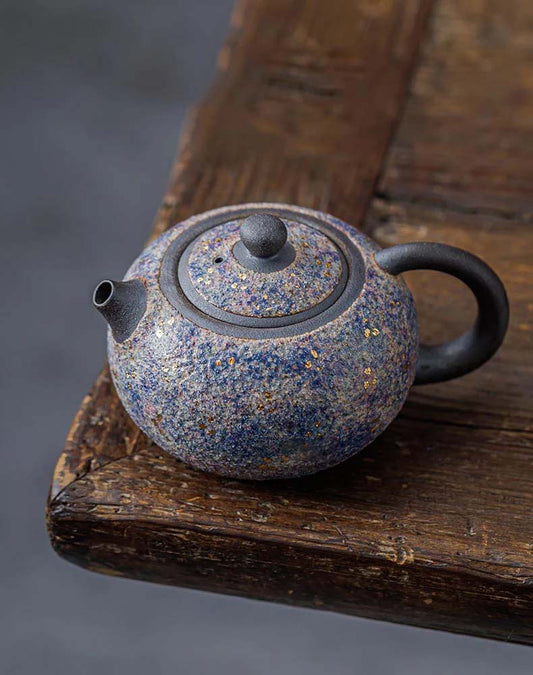
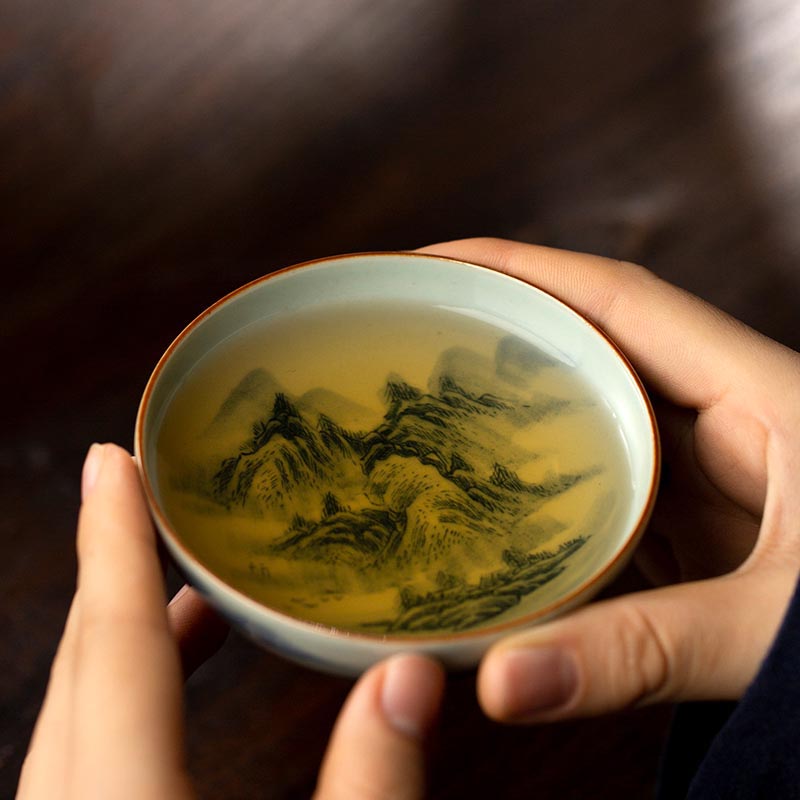
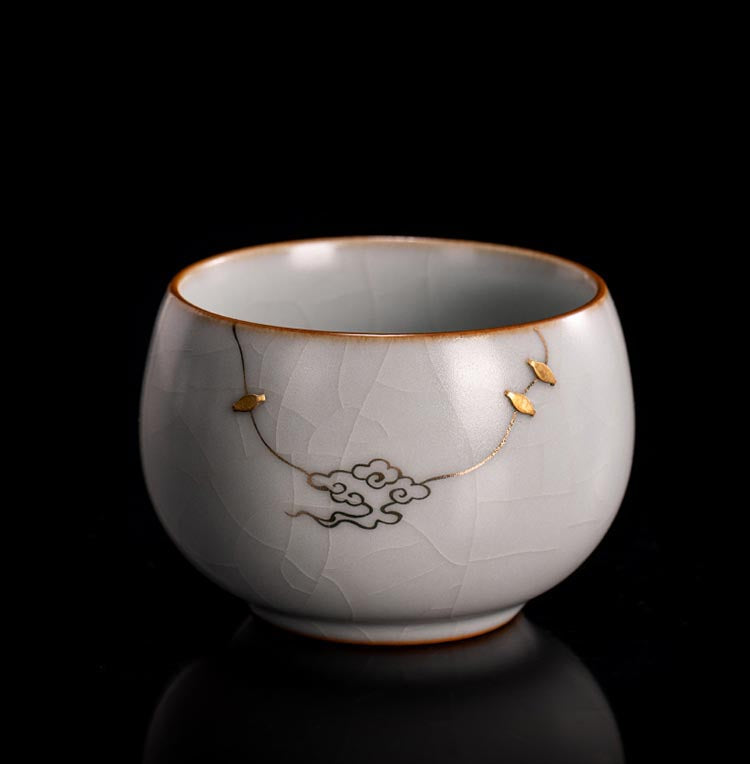
Glaze adds another layer of character. Under soft light, a good glaze has depth, not just color. Some are glassy and bright; others are muted, almost misty. Over time, fine crackle patterns can appear in certain glazes, especially if they were fired that way intentionally. Tea can slowly stain those crackles. Some people like watching that process. Others prefer the clean look of a clear glaze that shows the white porcelain beneath.
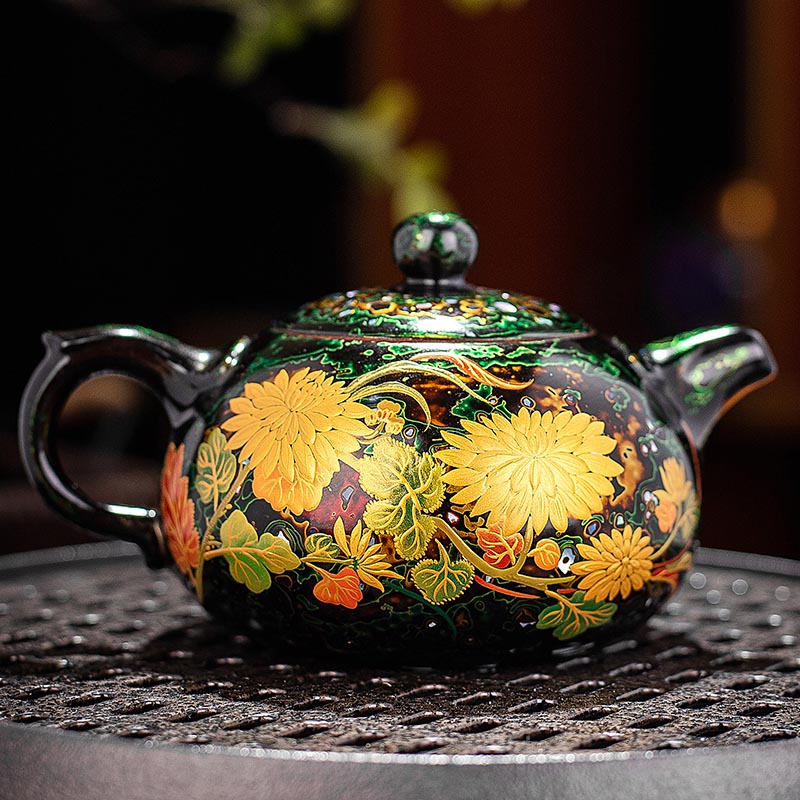
There are also stoneware teapots, which sit somewhere between Yixing clay and porcelain in density and feel. They are usually glazed, though sometimes partially unglazed. The clay body is thicker, heavier. In daily use, they are forgiving. They hold heat reasonably well, and the glaze makes cleaning straightforward. They may not have the precise cultural associations of Yixing ware, but in a home kitchen where the pot is used every morning without ceremony, that sturdiness counts.
Glass teapots appear more often now too, especially for flowering teas or when someone wants to watch leaves unfurl. Glass is honest. It shows everything, including uneven leaf expansion or fine particles swirling. It does not retain heat as well as clay, and it is fragile in a different way. A small knock against a sink edge can end it. Still, for certain teas and certain moods, seeing the liquor change color in real time adds its own clarity to the session.
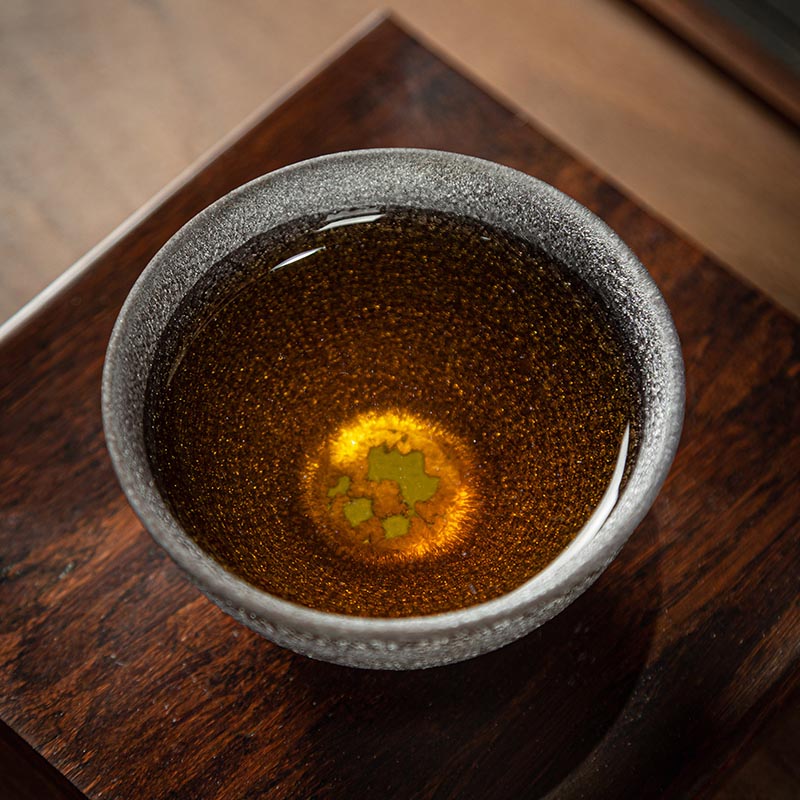
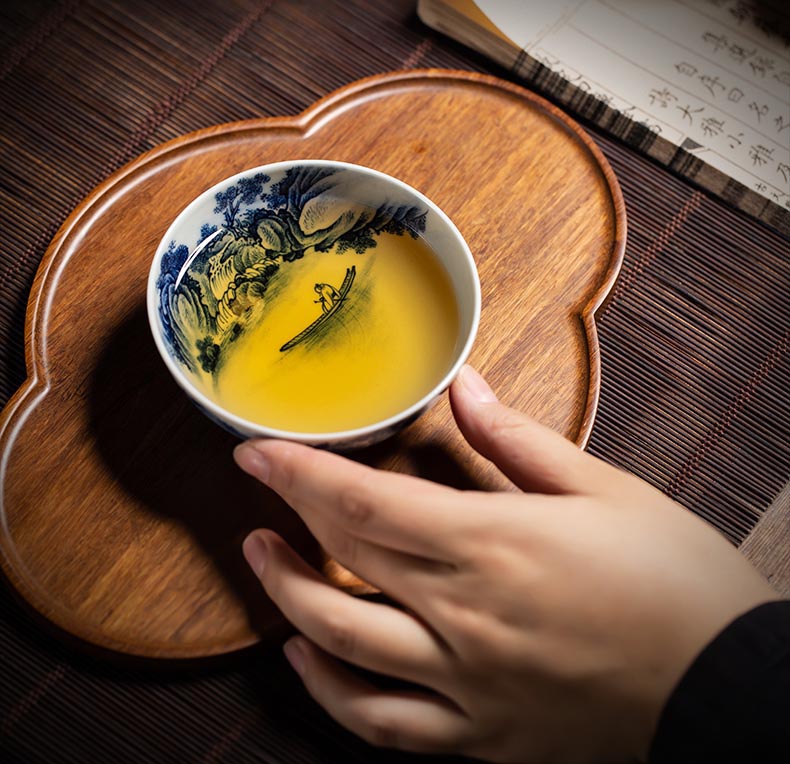
In gongfu practice, the teapot is rarely alone. It works with a fairness pitcher, small cups, a tea tray to catch spills. The material of the pot affects how all those pieces interact. A clay pot pours into a glass fairness pitcher, and you can see the color of the tea against the neutrality of glass. A porcelain pot paired with porcelain cups keeps the palette consistent, white interiors showing the liquor clearly. These are practical decisions as much as aesthetic ones.
The craft behind a handmade pot reveals itself slowly. The handle should allow two or three fingers to rest comfortably without strain. The knob on the lid should be easy to grip when hot. The foot ring should sit flat on the table without rocking. Even the sound of the lid settling into place after you lift it has a certain softness if the fit is right. These are not dramatic qualities. They are the difference between something you admire occasionally and something you reach for every day.
Over time, materials record use differently. Unglazed clay deepens in tone and grows warmer to the touch. Porcelain may show faint tea stains inside if you do not rinse thoroughly, though those can be cleaned. A chipped rim on porcelain is sharp and final. A small nick on clay feels less jarring, but it is still damage. None of these materials are immune to carelessness. They ask for attention, not reverence.
When people ask what teapots are made of, they are often expecting a simple list: clay, porcelain, glass. But the real answer shows up in how the pot behaves when filled with hot water, how it balances when tilted, how the lid breathes through its tiny air hole, how the surface changes after a hundred infusions. The material is not just what the pot is made from. It is how the pot participates in the act of brewing, quietly shaping each cup without calling attention to itself.