Is a Kettle and a Teapot the Same Thing? Here’s the Real Difference
A kettle and a teapot are not the same thing, even though in casual English the words sometimes get blurred. In a working tea setup, especially in Chinese tea practice, they live on opposite sides of the tray and do very different jobs.
A kettle’s task is simple and demanding. It brings water to temperature and keeps it there. That is all. In gongfu brewing, where you may pour ten or fifteen short infusions from the same leaves, the kettle is the steady background presence. It sits slightly behind the action, often on a side burner or an electric base, quietly maintaining heat while you focus on the leaves.
The teapot, on the other hand, is where the tea actually happens. Leaves go in. Water meets leaf. Extraction takes place. The teapot shapes the liquor in ways a kettle never could.
If you place them side by side, the differences are obvious. A kettle is usually larger, built to hold enough water for repeated infusions. Its spout is long and practical, designed for a clean stream and safe distance from steam. The handle arches over or sits well away from the body to protect your hand from heat. Lids are often loose-fitting and easy to lift. Materials lean toward durability and heat conduction: stainless steel, cast iron, sometimes glass. In a traditional charcoal setup you might see a clay kettle, but even then, its clay body is thicker and more robust than most teapots.
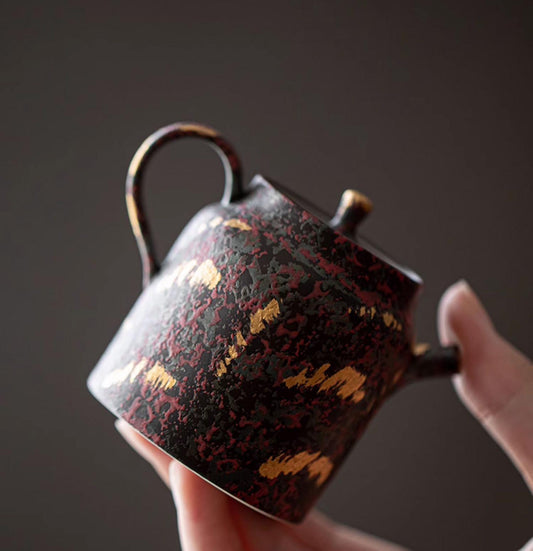
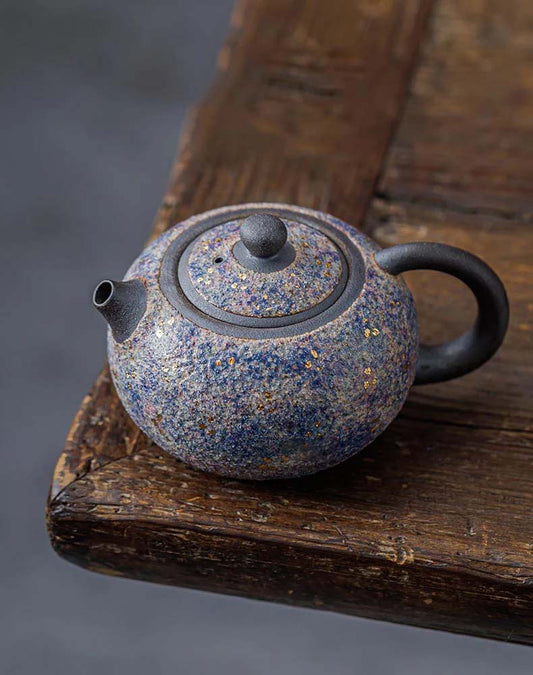
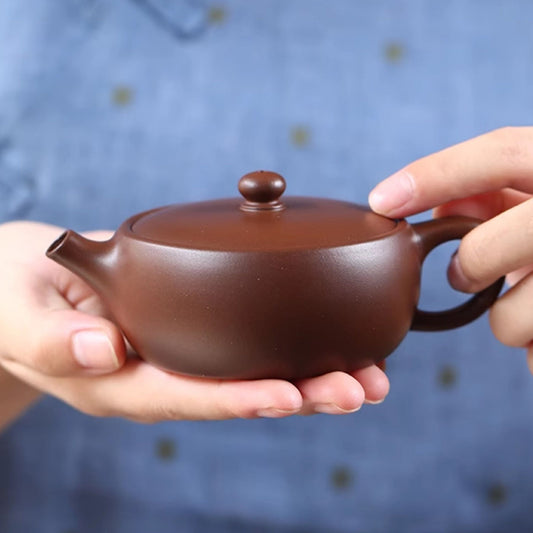
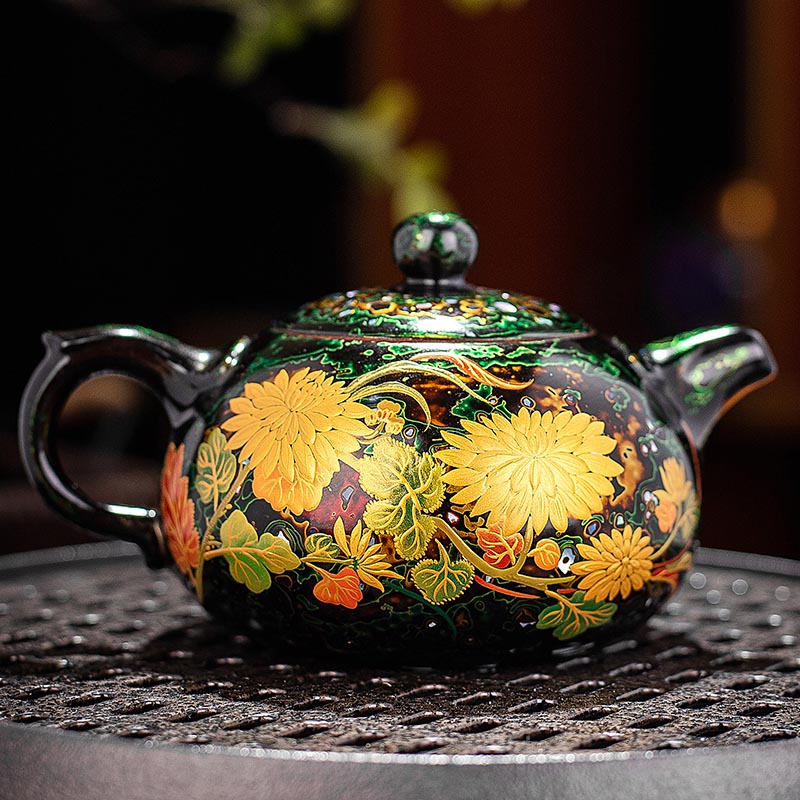
A teapot is smaller and more deliberate in proportion. In Chinese gongfu brewing, many teapots hold less than 200 milliliters, sometimes much less. The lid is fitted carefully. On a good Yixing pot, you feel a slight resistance as the lid settles into its gallery. Tilt it, and the lid stays seated with a soft suction sound. The spout and handle are aligned with intention. When you pour, the stream should be steady and centered, not dribbling down the chin of the spout. These details matter because the teapot controls contact time between water and leaf. A clean, decisive pour means you can stop extraction exactly when you want.
You would never brew tea directly in a kettle in a gongfu setting. The scale is wrong, and so is the feel. The kettle is about raw heat. The teapot is about calibration.
Material changes the conversation too. Many Chinese teapots are made from unglazed Yixing clay. The clay has a dry, almost sandy texture when new. After months or years of use, it develops a low sheen where hands and tea meet the surface. The walls hold heat in a particular way. Oolong or puerh can open fully inside that small, warm chamber. A porcelain teapot behaves differently. Its glazed surface is smooth and non-porous. It does not absorb aroma. It reflects heat more quickly. You notice these differences in the cup, but you also feel them in the hand. Porcelain warms fast and cools fast. Yixing clay feels steadier, less slippery.
Kettles rarely invite that kind of intimacy. You handle them, of course, but you do not cradle them. Their surfaces are often too hot or too industrial to encourage touch. They are tools in the most straightforward sense.
In practice, the relationship between kettle and teapot is almost like breath and voice. The kettle provides the breath, the hot water that animates everything. The teapot shapes that breath into something specific. Change the teapot and the tea shifts. Change the kettle and you mostly adjust efficiency and heat stability.
Even the sound is different. A kettle coming to boil announces itself. The rising rumble, the click of an electric switch, the soft rattle of a lid. A teapot is quieter. The small clink of porcelain lid against rim. The muted thud as you set it back on the tray. The quick, bright stream of tea hitting a fairness pitcher. When the last drops fall, you sometimes give a gentle shake, feeling the balance in your wrist. A well-made pot feels centered as you tilt it. A poorly made one pulls slightly off-axis, and you compensate without thinking.
Cleaning reveals another difference. A kettle is rinsed, maybe descaled if mineral buildup appears. It is a maintenance routine. A Yixing teapot is usually rinsed only with hot water, no soap, and dried with the lid off. Over time, tea oils subtly deepen the clay’s color. A porcelain teapot can be washed more thoroughly, though repeated strong detergents can dull the glaze. You become aware of these small habits because the teapot stays close to the leaves. It carries traces of previous sessions in a way a kettle does not.
In everyday Western kitchens, the word “teapot” sometimes refers to any vessel that pours hot water. That is understandable. But in Chinese tea practice, the separation is practical and clear. One boils water. The other brews tea. Confusing them would be like mistaking a pan for a stove.
When you sit down at a tea tray and arrange your tools, the kettle waits slightly apart, humming. The teapot sits at the center, dry leaves measured inside, lid resting lightly on top. The session will pass through that small chamber again and again. The kettle supports it, but it does not replace it.
They are partners, not twins.