A Yixing Teapot at Sotheby’s Misses the Reality of Real Tea Use
When a Yixing teapot appears at Sotheby’s, it is easy for the conversation to drift upward into numbers, provenance, and the language of rarity. But what I always find myself wondering is much simpler. How does it pour? How does the lid sit? Has anyone really used it, or has it lived most of its life under glass?
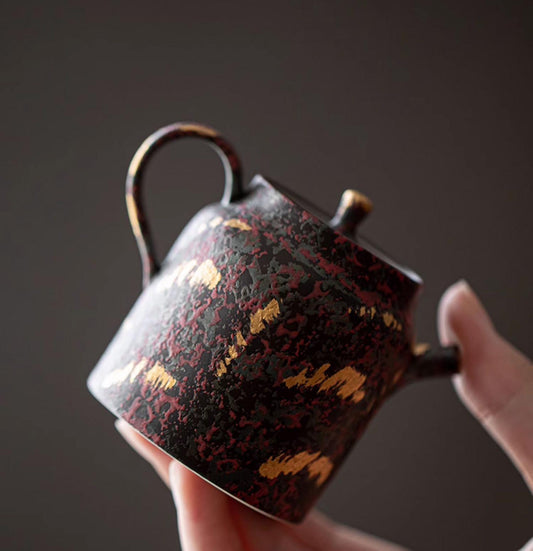
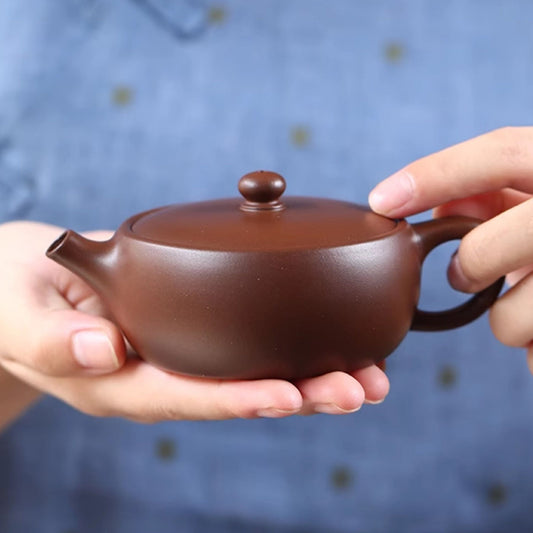
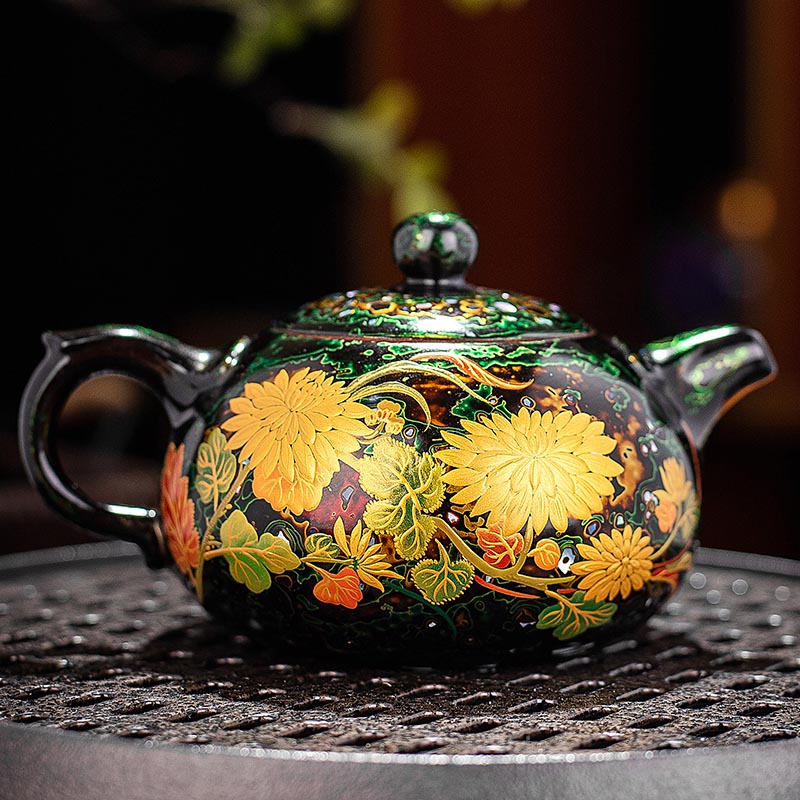
Yixing teapots were never meant to be spectacle pieces. They are small by design, made for concentrated brewing, usually in the context of gongfu tea. A good one rests naturally in the palm, the handle allowing the index finger to steady the lid knob as you tilt. The spout should send out a clean, even stream that stops sharply when you bring the pot upright again. If you brew often enough, you begin to notice how subtle differences in wall thickness hold heat for oolong versus sheng puer, how the clay body feels slightly warm and dry against your fingers after the second infusion, how the lid gives a faint, satisfying click when it settles into its gallery.
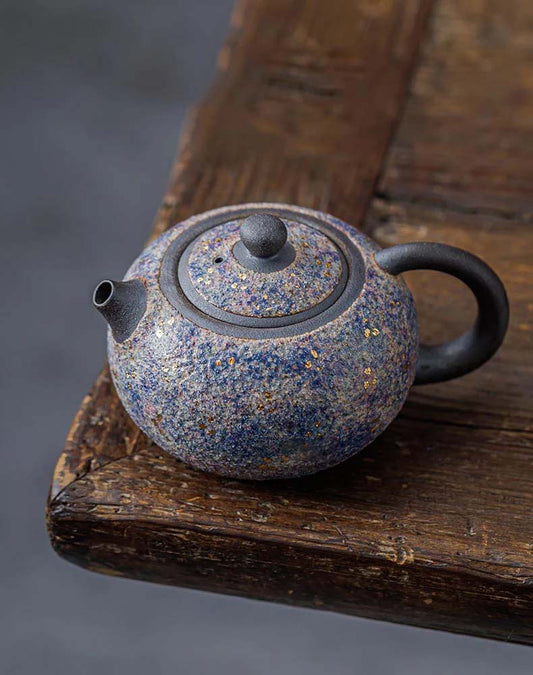
At auction, those details are often translated into different terms. You read about the purity of the zisha clay, the named workshop or maker, the period. All of that matters. Certain clays from Huanglongshan have a fine, sandy texture that feels alive in the hand, not gritty but not slick either. Older pieces sometimes show a soft sheen that only comes from handling and tea oils over time. It is not a glossy glaze but a kind of low, breathing luster. You cannot fake that easily, and collectors know it.
Still, there is a quiet tension between the teapot as a brewed-with object and the teapot as a collectible artifact. A Yixing pot develops through use. The inside gradually absorbs trace elements from the tea. The exterior darkens where fingers repeatedly grip the handle and thumb the lid. If a Sotheby’s lot describes an example as pristine, unused, perfectly preserved, I find myself both impressed and slightly sad. A pot that has never met tea is technically complete, but it has not yet done the work it was shaped for.
Craftsmanship becomes more legible the closer you look. On a well-made Yixing pot, the spout, handle, and knob align on a straight axis. Turn it slowly and you see that nothing pulls to one side. The lid fits closely enough that you can cover the air hole with your finger and feel a slight resistance when pouring. The foot ring is trimmed cleanly, not left rough. Even the interior tells a story. Handmade pieces often show faint tool marks, subtle evidence of slab construction and paddling. These are not flaws. They are the memory of the hand.
When such a pot enters the auction world, it is often elevated as sculpture. Photographed against neutral backdrops, lit to emphasize contour, it can look monumental despite its size. But in real use, it lives among other tools. A fairness pitcher waiting to receive the liquor. Small porcelain cups warming on a tray. A tea caddy opened just long enough to weigh out a few grams of twisted leaves. The pot is passed, rinsed, tilted, wiped. A good Yixing pot feels balanced even when full, the weight distributed so the wrist does not strain during multiple infusions.
I have handled a few older pieces that had the slightly softened edges and mellow color that only come from decades of brewing. The clay felt denser than many modern pots, the pour surprisingly quick for such a compact shape. You could sense how the maker understood proportion, not in an abstract way but in how the pot performed. It cooled at the right pace between infusions. The lid did not rattle. The stream did not sputter at the end.
Auction houses tend to focus on named masters, especially from the twentieth century onward, when studio identities became more visible. That can overshadow the many anonymous or workshop-made pots that serve tea beautifully every day. There are contemporary Yixing teapots that will never see an auction catalogue but are deeply satisfying to brew with. Their value reveals itself slowly, in how they respond to heat and leaf, in how they age on your shelf.
I sometimes think about the buyers who win those Sotheby’s lots. Some will keep the pot as an investment, stored carefully, handled with gloves. Others, I hope, will rinse it, warm it, and finally let it do what it was formed to do. There is a particular pleasure in that first infusion from a long-idle pot. The clay darkens as it absorbs hot water. The aroma gathers under the lid. When you pour, the stream draws a clear arc into the pitcher, and for a moment the conversation shifts away from hammer prices and back to taste.
In the end, a Yixing teapot’s real measure is not how high it climbs at auction but how steadily it performs across dozens, then hundreds, of sessions. How the lid continues to seat properly. How the spout keeps its clean line. How the clay surface, once dry and matte, grows subtly smoother from years of touch. Those are details you will never see in a catalogue photograph, but they are the ones that stay with you when the tea is gone and the cups are empty.