A Japanese Silver Teapot Transforms the Brewing Experience
A Japanese silver teapot changes the pace of brewing before the water even goes in.
The first thing you notice is the weight. Even a modest one has a density that feels deliberate in the hand. Not heavy in a clumsy way, but steady. When you lift it by the handle, the center of gravity sits low and close to the body, so it does not wobble. That balance matters once it is filled with hot water. You feel it immediately when you tilt to pour. The movement is controlled, almost restrained.
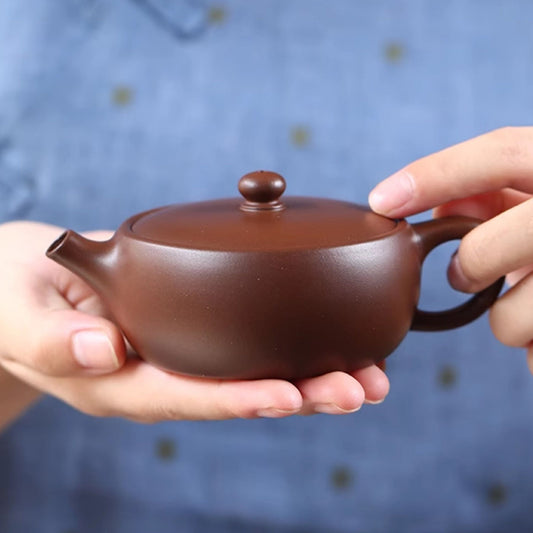
In Chinese tea practice, especially gongfu brewing, we tend to work with clay or porcelain pots for the leaves themselves. Yixing clay softens certain oolongs, porcelain gives clarity to a green or a young sheng. A silver teapot usually steps into a different role. Often it is used as a water kettle rather than a leaf-brewing pot. Silver conducts heat efficiently and, more importantly, holds it evenly. The water inside comes to temperature quickly and remains stable if the walls are thick enough.
When you tap the side lightly with a fingernail, there is a tight, high sound. It is nothing like clay. The lid, if well made, settles into place with a faint metallic whisper. A good lid does not rattle when the water rolls toward the spout. There is a subtle resistance when you lift it, just enough that steam does not escape in uneven bursts. That detail tells you something about the handwork. A poorly fitted lid makes pouring feel nervous. A well-fitted one makes it calm.
Many Japanese silver teapots are hammered by hand. If you run your fingers over the surface, you can feel the faint dimpling where each hammer strike landed. Not sharp, not decorative in a flashy way. The pattern breaks up reflections so the surface holds light rather than glaring. Over time, that bright silver softens. It takes on a muted glow from handling, especially around the lid knob and handle where fingers rest. The change is not dramatic, but if you brew often, you see it.
In a gongfu session, water quality and temperature shape everything. A silver kettle gives you a different relationship to that water. When you pour from it into a fairness pitcher or directly over leaves in a small Yixing pot, the stream is clean and direct. The spout on a well-made piece narrows slightly toward the tip, so the water does not splash. The line of the pour is easy to control. You can trace the inside rim of a gaiwan with a thin ribbon of water, or fill a clay pot quickly without drenching the tea tray.
The handle is worth paying attention to. Some are wrapped in rattan or insulated to protect the hand from heat. Others are solid silver with a slight arch that keeps your knuckles away from the body. After the kettle has been at a boil, you feel the difference immediately. A poorly designed handle forces you to grip awkwardly or hurry the pour. A comfortable one lets you move at the pace the tea requires.
There is also the matter of sound. When water begins to simmer in silver, the tone is finer than in iron. Not as deep, not as throaty. It starts with a soft ticking along the interior walls, then a gentle hiss. If you are attentive, you can hear the shift from small bubbles clinging to the sides to a full rolling boil. For certain teas, especially delicate green oolongs, you do not want a violent boil. With silver, it is easier to catch that moment just before the water becomes too aggressive.
Silver does require care. It will tarnish if neglected, especially in humid environments. Some tea drinkers polish frequently to keep a bright shine. Others allow a natural patina to develop and only clean the interior carefully. Inside, mineral buildup from water shows up more clearly against the pale metal than it does in iron or clay. A gentle descaling routine becomes part of ownership. It is not difficult, but it is real. This is not a set-it-on-the-stove-and-forget-it kettle.
I have seen people buy silver teapots because they look impressive on a shelf. And they do. The glow of metal next to matte clay and soft porcelain can be striking. But the ones that earn their place in a working tea setup show small signs of use. The underside darkens slightly from heat. The handle smooths where fingers curl around it. The lid knob warms quickly and cools slowly. These are quiet confirmations that the object is not just admired but handled, heated, lifted, and poured.
Placed beside a Yixing pot and a row of small porcelain cups, a Japanese silver teapot does not feel out of place. It brings a different material language into the session, but it still serves the same sequence: heat the water, rinse the leaves, brew, pour, refill. It stands slightly apart from the clay and glaze, cool and reflective, yet it participates fully in the rhythm.
What I appreciate most is not symbolism or cross-cultural comparison. It is the simple reliability of the pour and the way the kettle steadies your hand. When the water flows cleanly and at the right temperature, the rest of the tea session falls into place. The silver vessel does its work quietly. After a few rounds of brewing, you stop thinking about the metal itself and start noticing the aroma rising from the cups. The kettle waits, still warm, ready for the next infusion.