Painted Yixing Clay Teapots Are Meant for Use, Not Just Display
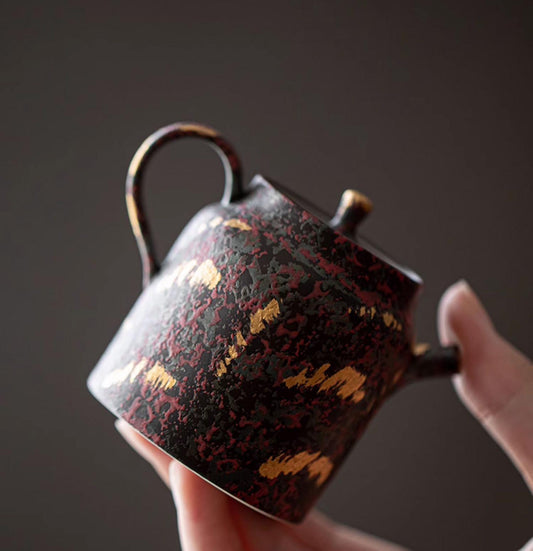
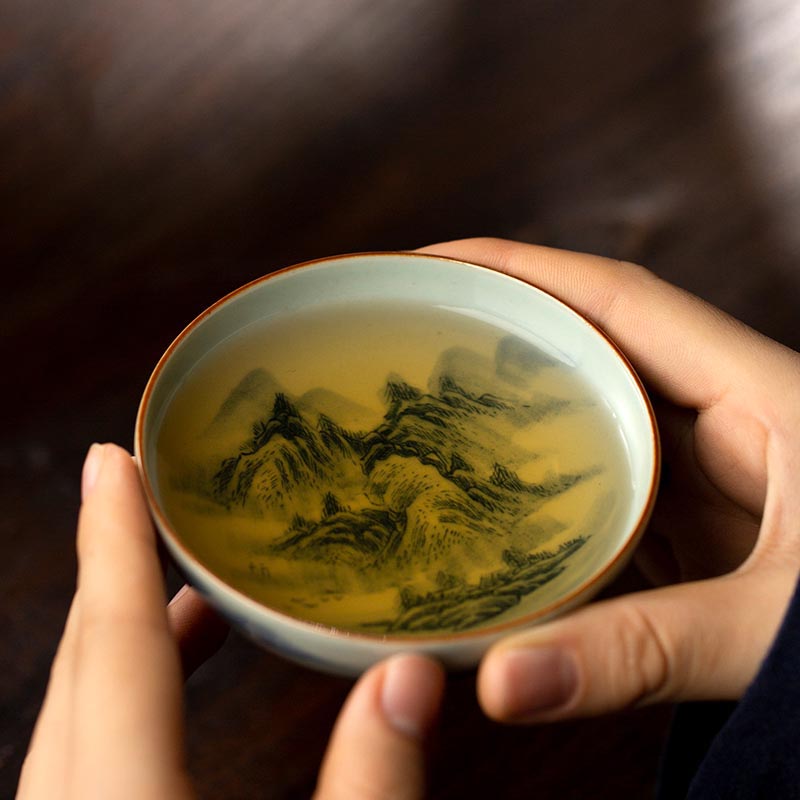
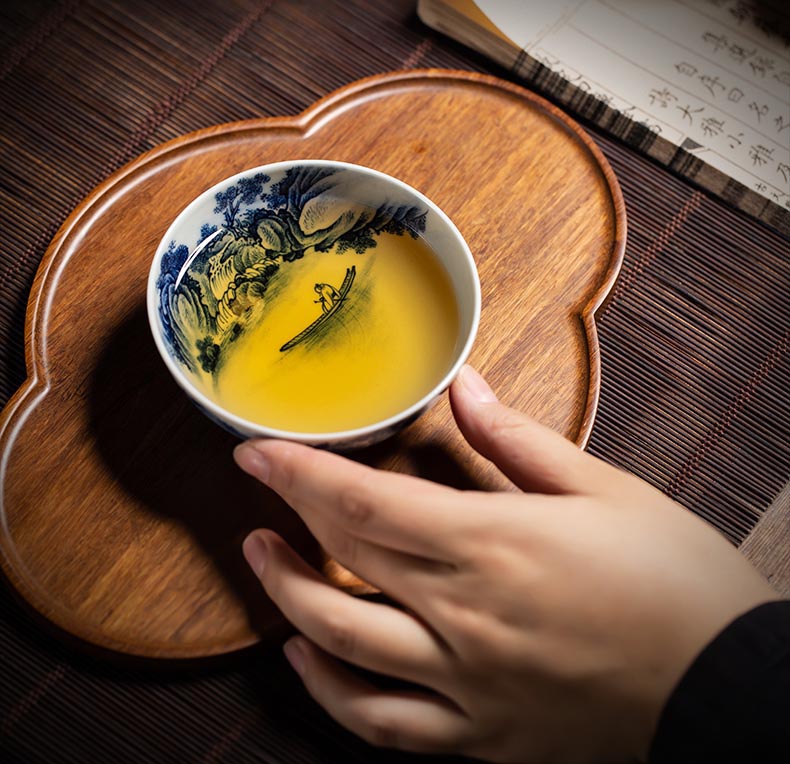
When people first encounter a painted clay teapot, especially one made from Yixing clay, the reaction is often hesitation. The surface looks finished, composed, almost like a small canvas. There might be a brush painting of bamboo, a few lines of calligraphy, perhaps a landscape no larger than a palm. It can feel less like a brewing tool and more like something to keep behind glass.
But in practice, most painted clay teapots were never meant to be untouchable.
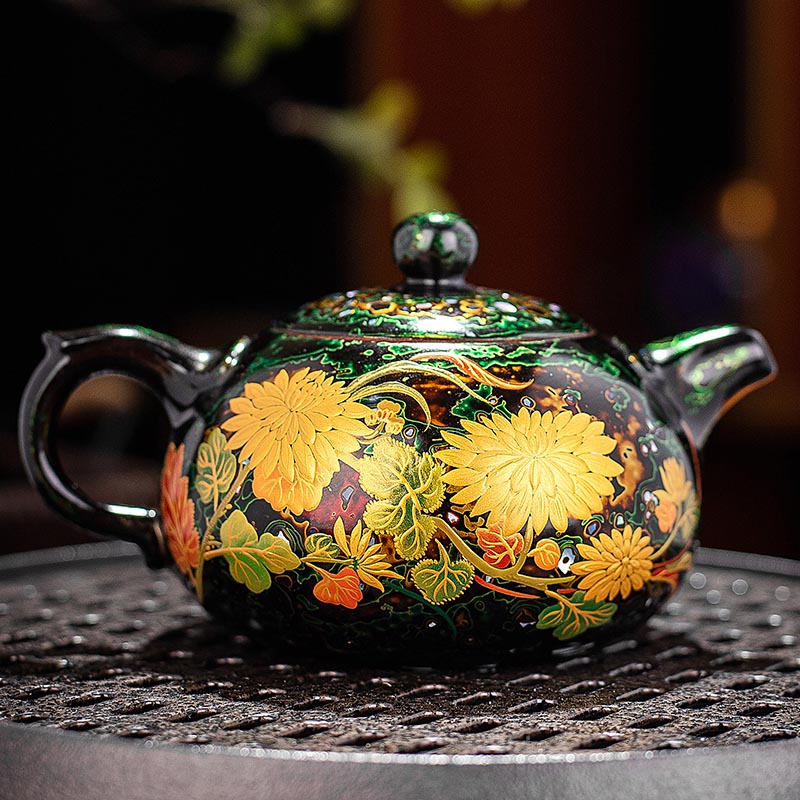
The painting on a clay teapot sits in an interesting space between craft and use. On Yixing zisha, decoration is often done after the pot is fully formed and fired. The artist uses mineral pigments or specialized overglaze enamels and fires the pot again at a lower temperature. The surface is still largely unglazed clay, with the painted areas fused onto it. If you run a finger across the design, you can sometimes feel the slightest change in texture where the pigment sits. It is not a thick enamel like Western ceramics. It is more restrained, almost absorbed into the clay.
Because of that, the pot remains what it was meant to be: a working vessel.
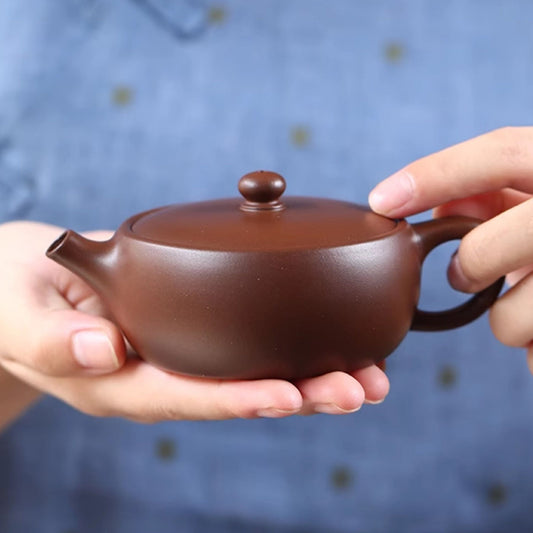
The first thing I look at is not the painting but the structure. Does the lid seat cleanly without wobble? When I tilt the pot, does the lid stay in place with just a finger resting lightly on the knob? The spout should align with the handle so that when you pour, the stream falls straight without twisting. If the painting is beautifully done but the pour breaks or dribbles, it will eventually sit unused.
In gongfu brewing, the teapot is lifted and tilted many times in a short session. Balance matters. A well-made pot feels centered in the hand. The handle allows a natural grip without forcing your wrist at an awkward angle. The added layer of painting does not change that balance much, but it can change how you relate to the surface. You become slightly more aware of where your fingers rest. Over time, you notice that the unpainted clay darkens subtly with handling, while the painted areas remain more stable in color. That contrast can make the brushwork stand out even more after months of use.
There is a practical question that comes up often: will the painting wear off?
On a properly fired piece, the decoration should be stable. It will not dissolve under hot water. But it can soften with years of scrubbing or careless cleaning. This is one reason most experienced tea drinkers avoid detergents with Yixing pots in general. A rinse with hot water, a soft cloth if needed, and air drying are usually enough. If tea stains develop on the interior, they are part of the life of the pot. On the exterior, gentle use tends to create a soft sheen on the clay, while the painted design remains crisp.
The interaction between clay and painting also affects how the pot ages. Bare zisha develops what people often call a patina, though it is less a coating and more a gradual change in how light reflects off the surface. Oils from hands, steam, and repeated wiping bring out depth in the clay body. When part of that surface carries a painted plum branch or a few characters of calligraphy, the aging process frames the artwork rather than obscuring it. The clay warms in tone. The brush lines stay defined. The pot begins to look less like a new object and more like something settled into a routine.
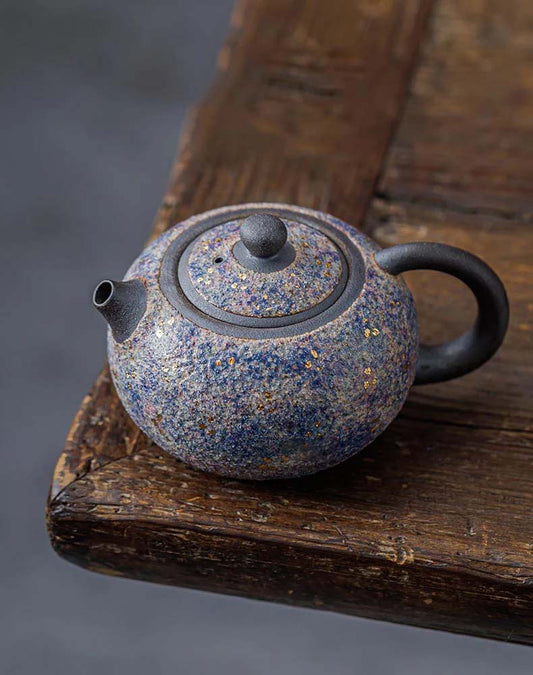
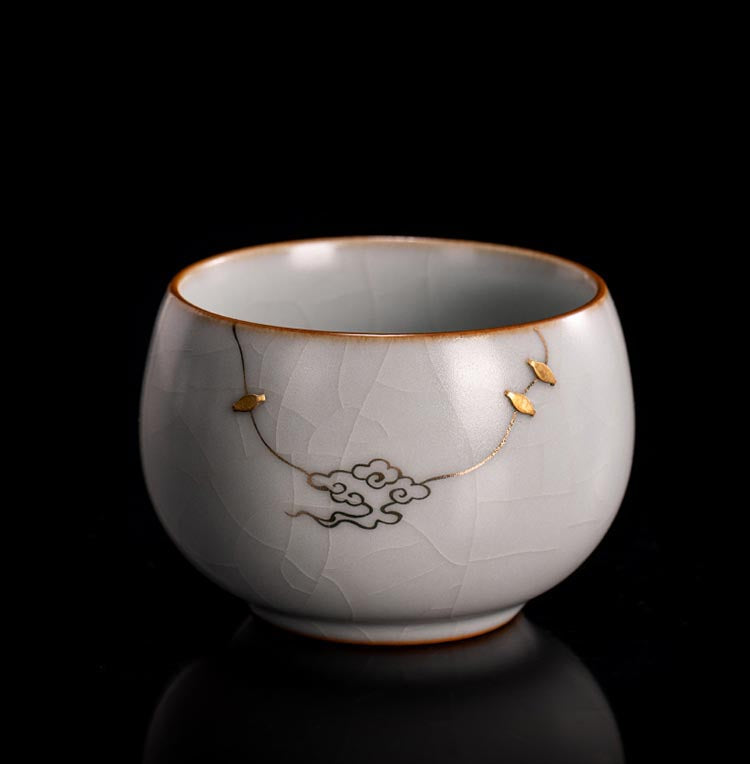
Painting on clay teapots is not limited to Yixing. Some Chaozhou pots are decorated more boldly, and certain stoneware teapots from other regions carry brighter enamels. There are also slip-painted designs, where contrasting liquid clay is applied before firing. These feel more integrated into the body of the pot. The line between form and decoration is softer. When you handle these, the design does not sit on top of the clay so much as emerge from it.
What interests me most is how the painting influences attention during brewing. With a plain pot, your focus goes to the tea itself. With a painted one, there is a subtle shift. As you wait through a short infusion, your eyes rest on the brushwork. You notice whether the lines are confident or tentative, whether the composition wraps naturally around the curve of the pot or feels forced onto it. A well-composed painting works with the pot’s volume. A branch may arc along the belly. Calligraphy may follow the rise toward the shoulder. When this alignment is right, the pot feels unified, not decorated as an afterthought.
There is also a social dimension. In a small tea gathering, someone will eventually pick up the pot to look more closely. They turn it slightly, reading the inscription, tracing the painted leaves with their eyes. This handling is part of the object’s life. A teapot that cannot tolerate being touched is poorly suited to gongfu tea. The painting should invite proximity without demanding special treatment.
Not every painted teapot succeeds. Sometimes the decoration is technically competent but overwhelms the form. Bright enamel can compete with the quiet texture of clay. Heavy imagery can make a small pot feel visually crowded. In those cases, I find myself reaching for a simpler piece when I actually want to brew. The painted pot remains admired but unused, which is a quiet kind of failure for functional ware.
On the other hand, a modest design, a few strokes of orchid or a short poem placed with care, can deepen your relationship with the pot over time. You begin to associate certain teas with that image. A dark roasted oolong poured from a pot bearing bamboo feels different from a young sheng puerh brewed in the same vessel. The association is not mystical. It is practical and habitual. The eye registers the image before the hand lifts the pot, and memory follows.
There is something satisfying about seeing steam curl past a painted scene. The artwork is not static. It exists in the middle of heat, water, and fragrance. The lid clicks softly into place. The spout releases a clear stream. The painting, no matter how refined, serves this sequence.
After enough sessions, the distinction between art and tool becomes less sharp. The brushwork is still there, but it no longer asks to be evaluated. It simply accompanies the act of brewing. The clay grows warmer in tone. The handle fits your fingers without thought. The painted bamboo or plum blossom becomes part of the rhythm of pouring, nothing more and nothing less.