The Unique Role of China Teapots in Daily Gongfu Brewing
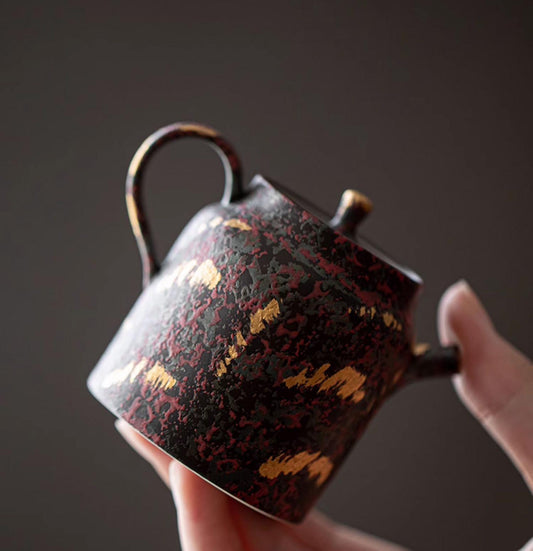
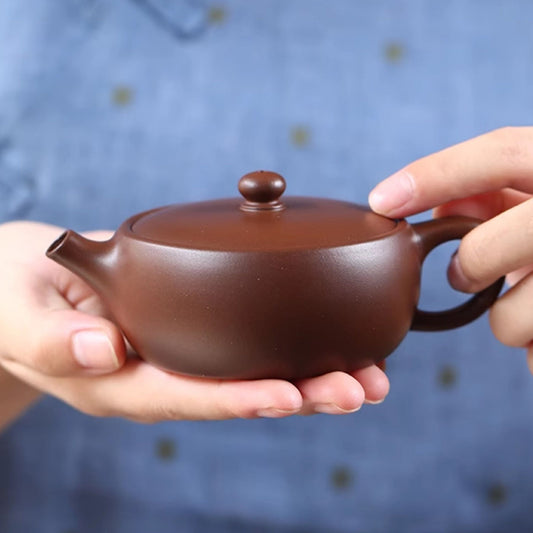
A good Chinese teapot is understood the moment you begin to use it. Before you think about clay type or firing temperature, you notice how it sits in the hand. A small Yixing pot, barely larger than your fist, has a particular balance when filled with hot water and leaves. Empty, it can feel almost weightless. Filled, it settles into the palm with a quiet assurance. When you tilt it, the weight shifts forward, and you can tell whether the handle was placed thoughtfully or simply attached.
In gongfu brewing, the teapot is not a serving vessel in the Western sense. It is a working chamber. It holds a tight measure of leaf and water, often for seconds at a time. Because of that, proportion matters more than decoration. The spout must align cleanly with the body so the stream falls where you intend. A good spout does not sputter or dribble at the end of the pour. It cuts off decisively when you return the pot upright. If the lid fits well, you can cover the small vent hole with a finger and the flow will stop immediately. That simple test tells you a lot about the precision of the fit.
Yixing clay has a dry, almost sandy feel when unglazed. It is not rough, but it does not slip in the hand the way porcelain can. Over time, repeated rinsing and handling soften the surface. The clay darkens slightly, especially where fingers rest along the handle or press the lid knob into place. This change is not dramatic. It is gradual, almost private. You begin to recognize your own pot by the way it reflects light differently from a new one.
There is a common idea that a Yixing pot “absorbs” tea in some mystical way. In practice, what you notice is more modest. The porous clay does seem to hold a trace of aroma after many sessions with the same type of tea. If you dedicate a pot to roasted oolong, you may catch a faint warmth in the empty pot when you lift the lid. But the more immediate effect is thermal. The clay walls hold heat steadily, especially in smaller, thicker-bodied pots. That stability helps when you are brewing tightly rolled oolongs or compressed pu’er that need consistent temperature to open.
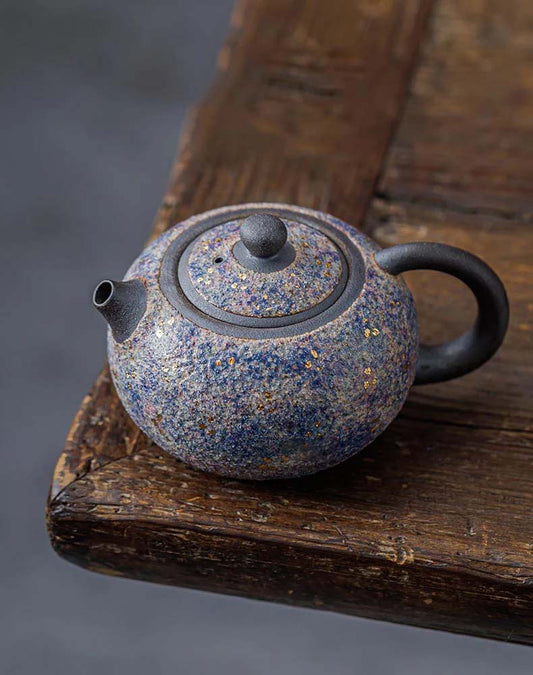
Porcelain teapots feel different from the start. The glaze is cool and smooth. When you pour boiling water over the exterior to warm the pot, the sheen becomes almost luminous under soft light. Porcelain does not mute aroma. It reflects it back cleanly, which is why many people prefer porcelain for greener teas or for tasting new leaves. The walls can be thinner, so the heat behavior changes. A thin porcelain pot loses heat more quickly than a stout Yixing pot, which can be an advantage with delicate teas that turn sharp if pushed too hard.
Lid fit is something you only begin to appreciate after using a few uneven pots. A well-made lid settles with a soft, precise sound, not a clatter. When you rotate it gently, it glides rather than grinds. If it wobbles, even slightly, you will feel it each time you pour. During fast gongfu brewing, that small irritation accumulates. The same goes for the knob. It should be comfortable to pinch when the pot is hot. If it is too small or too flat, you end up fumbling, and the rhythm of brewing breaks.
The handle is often overlooked until you encounter one that is wrong. In small pots, the handle may only take two fingers. It should allow a secure grip without forcing your knuckles against the hot body. On larger teapots, especially those meant for more casual brewing, the handle must counterbalance the full weight of water. A poorly proportioned handle makes the pot tip forward too quickly, and you compensate by tightening your grip. Over time, that tension becomes noticeable.
In a gongfu setting, the teapot rarely works alone. It empties into a fairness pitcher, then into small cups. Because the brewing is short and repeated, you pour often. A clean, narrow stream matters. A spout that splashes or spreads too widely makes the tea tray messy. After a session, you may find tea stains along the tray’s drainage slats or on the foot ring of the pot. Unglazed clay will show darkened areas if you are careless about wiping it down. Porcelain may develop fine crackle in the glaze over years, especially if exposed to rapid temperature changes. None of this is tragic. It is simply the record of use.
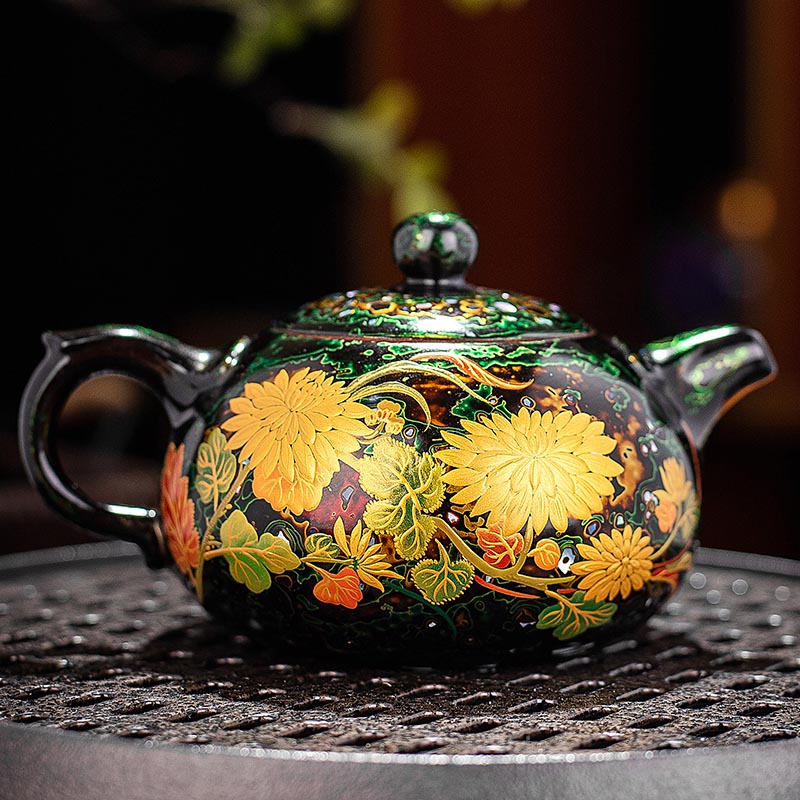
Some teapots are admired more than they are used. Intricate relief carving, sculpted forms shaped like bamboo or fruit, highly stylized handles. These can be beautiful, but if the spout is too short or the body too heavy for its size, the pleasure remains mostly visual. A simpler pot, with quiet lines and careful proportion, often proves more satisfying over hundreds of infusions. You reach for it without thinking.
Storage matters in quieter ways. If you keep a clay pot sealed away in a cabinet for months, it can develop a faint stale smell. It prefers to breathe. After use, it should be rinsed with hot water only, no soap, and left open to dry completely. A porcelain pot is less particular. It tolerates a bit more neglect, though tea residue will eventually dull the interior glaze if never cleaned.
What I appreciate most about Chinese teapots is not that they symbolize anything grand, but that they demand attention to small mechanics. The angle of the wrist, the sound of water hitting dry leaves, the weight shift as the pot empties. You begin to notice how quickly the last drops fall, whether the lid stays steady when you tilt, whether the pot feels alive in the hand or slightly awkward. Over time, these details become inseparable from the tea itself.
When a pot fits your brewing style, you stop evaluating it. You simply use it. The clay warms, the lid settles, the stream runs clean. The pot returns to the tray, and your hand reaches for the cups. That quiet sequence, repeated again and again, is where the teapot proves itself.