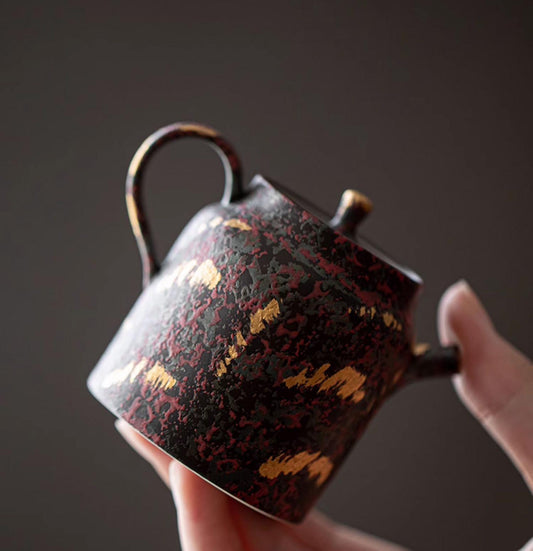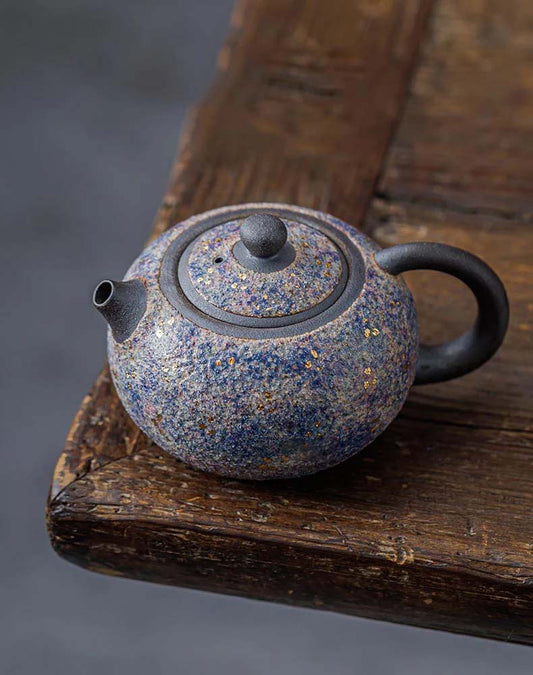
The Impact of a Large Handmade Teapot on Your Tea Brewing
A large handmade teapot changes the pace of a tea session before you even pour water into it. You feel it when you lift it from the shelf. The weight is real. Not unwieldy, but substantial enough that you adjust your grip and pay attention to how you hold it.
Most people who begin exploring Chinese tea start with small gongfu pots, the kind that sit neatly in one hand and empty in a few seconds into a fairness pitcher. A large handmade teapot sits somewhere else. It might hold enough for several people to drink comfortably without refilling every minute. It might be built for fuller infusions rather than quick, flashing steeps. It asks you to commit to a longer pour, a steadier wrist, and a slightly different rhythm.
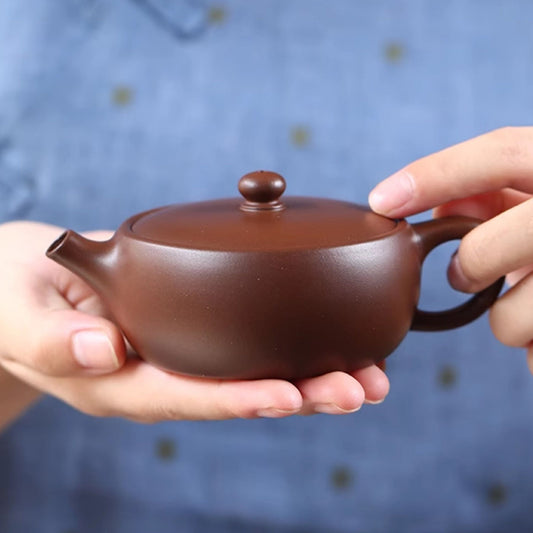
In clay, especially unglazed clay like Yixing, scale changes everything. A larger body holds heat differently. Once warmed, it stays warm. When brewing a roasted oolong or a darker tea, you can feel how the clay stabilizes the temperature. The first infusion wakes the pot. By the second and third, the walls are evenly heated, and the liquor seems rounder. It is not magic. It is mass and heat retention doing quiet work.
With a larger pot, proportions matter even more. A short, thick spout that might look charming on a small vessel can feel sluggish when scaled up. The best large pots pour in a clean, confident line. When you tilt them, the stream should be steady and centered, not wandering off to one side. If the spout is aligned well with the handle and the lid opening, the pour feels balanced, almost intuitive. If it is even slightly off, your wrist compensates, and you notice it every time.
The lid fit becomes more demanding at this size. On a small pot, a slight wobble can be forgiven. On a larger one, that wobble turns into a faint rattle as you pour. A well-made lid settles into place with a soft, dry sound. When you press the air hole and tilt the pot, the stream should slow or stop cleanly. That simple test tells you a lot about the precision of the maker’s hands. It also affects daily use. A lid that fits properly stays steady when you are pouring a full pot of hot tea for several cups.
Handles on large handmade teapots are easy to overlook until you have used a poorly shaped one. The curve needs enough space for your fingers, especially when the pot is hot and full. A handle that is too tight forces you into an awkward grip. One that is too thin digs into your fingers under weight. The better examples feel like they were shaped around a real hand, not just attached as an afterthought.
In a tea gathering, a larger pot changes the social shape of the table. Instead of brewing in rapid cycles, pouring every ten seconds, you might let the leaves open more slowly. The pot sits at the center of the tray with more visual presence. The sound of water filling it is deeper. When you lift the lid to add leaves, there is a brief cloud of steam that carries the aroma more generously. Several cups can be filled in one measured round, and there is a small pause as everyone tastes at once.
That does not mean large pots are always more impressive. They can be less forgiving. If you overleaf, the concentration builds quickly and is harder to correct. If you let the infusion run too long, the extra volume means more tea to drink through. Cleaning also takes more care. Tea leaves expand widely inside, and you need to rinse thoroughly to avoid stray fragments drying along the inner shoulder. A large unglazed pot, used often, will darken subtly over time. The surface grows smoother where your fingers rest. The lid knob becomes faintly polished from repeated lifting.
There is also the difference between a pot that looks impressive on a shelf and one that earns its place through use. Some large handmade teapots have dramatic forms, tall bodies, exaggerated spouts. They catch the eye. But when filled with water, they can feel top-heavy or slow to empty. Others look almost plain until you brew with them. Then you notice how the stream cuts cleanly, how the last drops fall without dribbling, how the lid stays quiet. Those are the pots that stay on the tray.
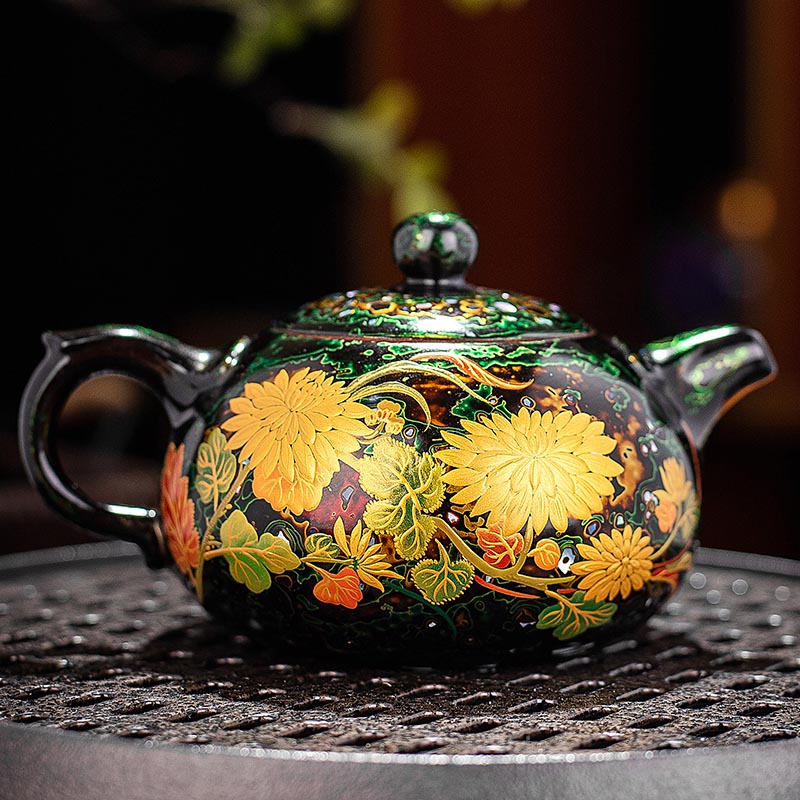
In porcelain, a large handmade teapot behaves differently. The walls are often thinner, the heat response quicker. You see the glaze gather slightly at the foot ring or thin out along a sharp edge of the spout. Under soft light, a pale glaze can show a faint sheen where it pools. Porcelain feels lighter in the hand at similar size, but because it cools faster, you adjust your brewing accordingly. It is well suited to more aromatic teas where clarity matters and heavy heat retention is not the goal.
I find that a large teapot encourages a different kind of attention. You cannot rush the pour. When it is full, you feel the momentum of the water shifting inside as you tilt. You sense when it is almost empty by the change in weight. The last part of the pour requires a slight lift of the elbow, a small rotation of the wrist. These are minor adjustments, but after many sessions they become familiar, almost automatic.
Over time, the pot records use in small ways. A faint tea line may appear just under the lid if you are careless with filling. The clay near the spout darkens slightly where steam escapes. The base shows fine marks from resting on a tea tray. None of this is dramatic. It is simply what happens when an object is handled, heated, rinsed, and dried hundreds of times.
A large handmade teapot is not necessary for good tea. Many sessions are better served by smaller vessels and tighter control. But when you have a table of friends, or when you want to sit with one tea for a longer stretch without constant resetting, its presence makes sense. It slows the sequence in a practical way. It asks your hands to adjust. And when the proportions are right, when the pour is clean and the lid steady, it feels less like an object on display and more like a tool that has settled into its role.