Glass Tea Cups and Saucers Transform the Gongfu Experience
Glass tea cups and saucers tend to surprise people who expect Chinese tea practice to revolve entirely around clay and porcelain. They look almost too simple at first, too transparent, as if they have stepped in from another kitchen. But once you start using them with loose leaf tea, especially in small gongfu sessions, their clarity becomes the point.
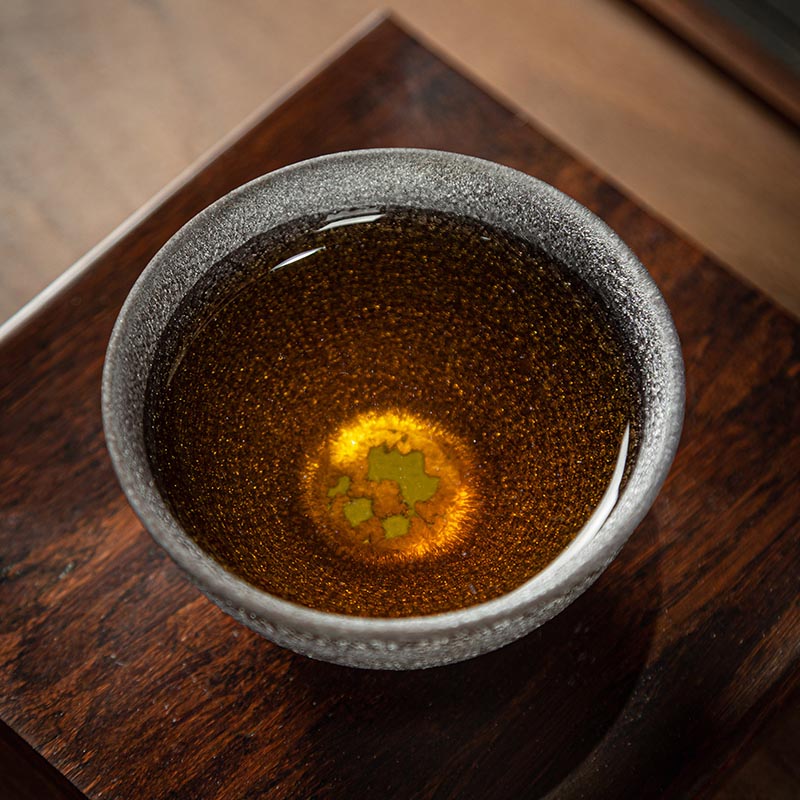
A thin glass cup shows you everything. The color of a young sheng pu’er as it shifts from pale straw to a deeper gold over several infusions. The soft green tint of a high mountain oolong. The amber density of a roasted yancha. In porcelain, you read the tea mostly through taste and aroma. In glass, you read it first with your eyes. You see the way the liquor settles, how light catches suspended particles, how quickly the steam thins. That visual information quietly adjusts how you brew the next infusion. If the color deepens too quickly, you shorten the steep. If it stays pale, you extend it. The cup becomes part of your feedback loop.
The saucer, which Western drinkers often associate with larger teacups, has a practical role in small Chinese cups as well. When the cup is thin and filled nearly to the rim, as it often is in gongfu service, the saucer gives you a margin for error. It catches the slight overflow when pouring quickly from a gaiwan or a small Yixing pot. It lets you lift a hot cup without pinching the rim. In longer tastings, when several infusions move across the table in quick sequence, the saucer keeps the tea tray from turning into a scatter of wet rings.
Thin glass behaves differently from porcelain in the hand. It gives heat more directly. With a very thin wall, you feel the temperature of the liquor almost immediately, which encourages smaller sips. You do not cradle it the way you might cradle a thicker porcelain cup. You hold it lightly by the rim or balance it on the saucer, waiting those few seconds for the heat to soften. There is something honest about that. The material does not buffer you from the tea.
Not all glass cups are equal, and small differences matter more than people expect. The thickness of the lip changes how the tea meets your mouth. A rounded, slightly thickened rim softens the edge of the pour. A sharp, thin rim makes the liquor feel more direct, sometimes even brighter. The curve of the bowl influences aroma. A slightly tapered shape gathers fragrance toward the nose as you lift it. A straight-sided cup releases aroma more quickly into the air.
Balance matters too. A well-made glass cup sits flat and steady on its foot ring. If the base is uneven, it will rock almost imperceptibly when set down, and over time that small instability becomes irritating. With repeated use, you start to notice how smoothly the base meets the saucer, whether it lands with a clean, quiet touch or a faint scrape. These are not grand aesthetic concerns. They are the kind of details that determine whether a cup stays in regular rotation or slowly migrates to the back of the shelf.
Glass also has a certain neutrality in taste. It does not absorb aroma the way unglazed clay can. When you brew a fragrant Dancong in a porcelain gaiwan and pour into glass cups, you get a clear, unaltered expression of the liquor. There is no seasoning effect, no gradual patina. After washing, the cup returns to zero. For tasting sessions where you are comparing teas side by side, this neutrality is useful. It keeps the focus on the leaves rather than on the vessel.
At the same time, glass shows everything, including neglect. Water spots, fingerprints, a faint line of tea stain at the base where liquor has dried. Porcelain can hide a little wear. Yixing clay can darken and grow richer with handling. Glass remains transparent. It asks to be rinsed thoroughly and dried carefully if you care about how it looks. Over time, even with good care, tiny scratches may appear, softening the surface clarity. I do not mind that. They mark use, not damage.
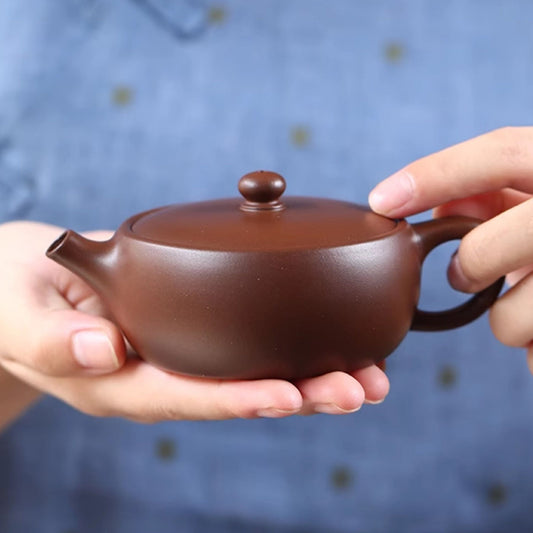
In a mixed tea setup, glass cups often sit alongside clay or porcelain brewing vessels. A small Yixing pot might handle the leaves, shaping the pour and controlling the flow. A fairness pitcher evens out the liquor before it is distributed. Then the tea lands in glass. The contrast is part of the pleasure. Matte clay, glossy porcelain, clear glass. Each material does a different job. The glass does not compete for attention. It frames the tea itself.
There are days when I prefer porcelain cups for their warmth and density in the hand. But when I am working through a new tea, trying to understand it, I reach for glass. Watching the liquor shift from infusion to infusion keeps me attentive. The saucer catches the drips when I pour a little too quickly. The cup cools just fast enough to invite the next sip.
They are not precious objects in the way a hand-thrown celadon cup might be. They chip, they break, they are replaceable. Yet in practice, they become familiar through repetition. You learn how high to fill them, how long to wait before lifting, how the light from a nearby window changes the look of the liquor inside. The simplicity is what makes them dependable. Nothing hidden, nothing added. Just tea, clearly visible, resting in your hand.