Different Teapot Styles and Their Impact on Chinese Gongfu Brewing
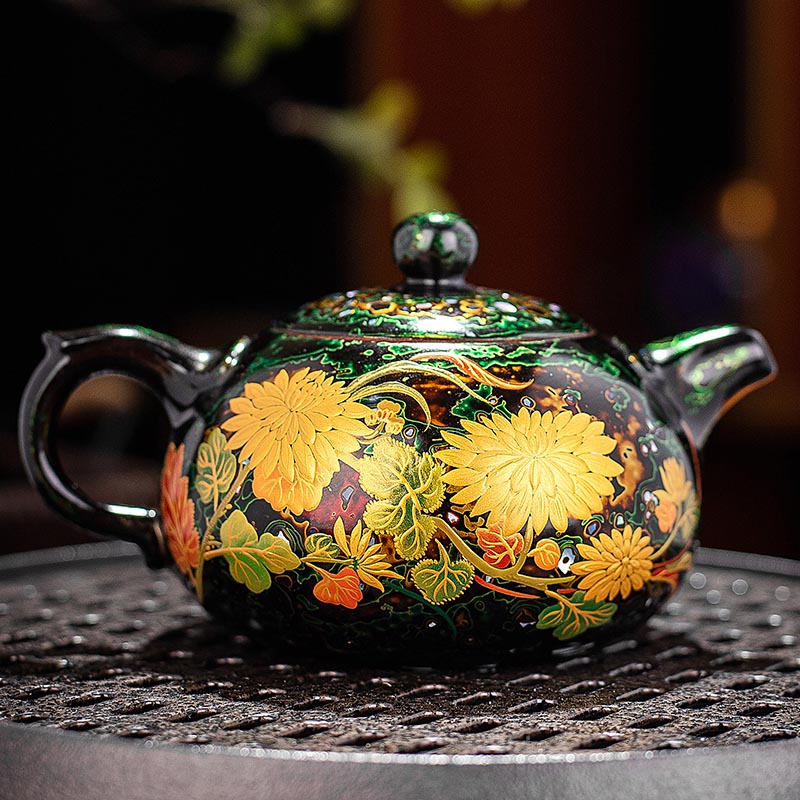
When people first start looking at Chinese teapots, they often notice decoration or color. What keeps someone using a particular pot, though, is usually shape.
In gongfu brewing, the pot is small enough to fit in one hand, and that changes everything. You feel its weight when it is empty, and again when it is packed with wet leaves. A rounded Yixing pot with a low center of gravity feels steady when you tip it forward. The arc of the pour is short and direct. If the spout is cut cleanly and aligned well with the handle, the stream comes out tight and even, not splashing or splitting at the end. That control matters when you are pouring into a fairness pitcher or directly into small cups and you want each one to taste the same.
The classic Yixing styles are often described as either geometric or naturalistic. In practice, the difference is something you feel more than categorize. A geometric pot, square or hexagonal, demands precision. The planes need to meet cleanly. The lid has to sit flush without wobbling. If you run a finger along the seam where the lid meets the body, you should feel almost nothing. When you pour, the lid should hold in place with a gentle press of one finger over the knob, and when you stop, the stream should cut off without a trailing drip. A good pot does not need to be babied into behaving.
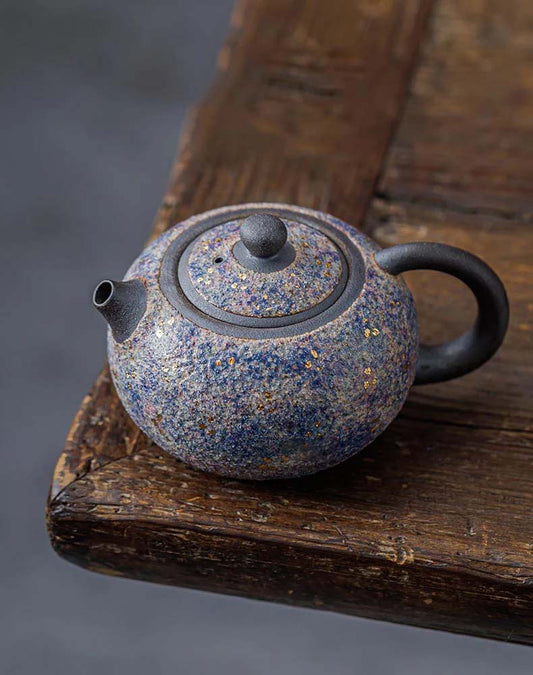
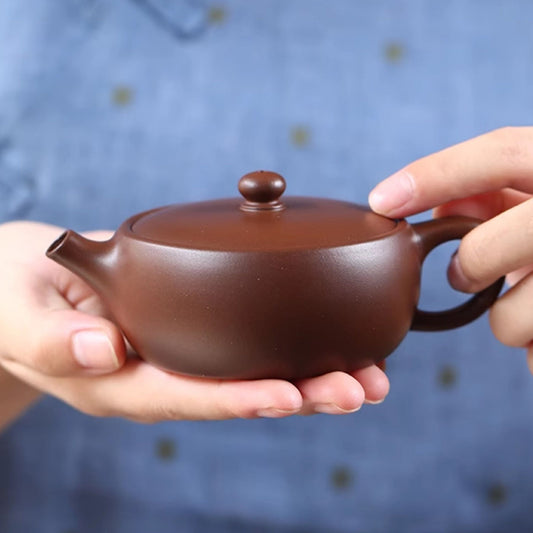
The more rounded, organic forms are often easier to live with day to day. A pear shaped pot nestles into the palm. A flattened, drum shaped pot spreads the leaves out, which can be useful for oolongs that unfurl wide. The thickness of the wall changes how the tea behaves. Thicker zisha clay holds heat, which suits roasted oolongs or aged teas. Thinner walls respond more quickly to temperature shifts. When you rinse the pot with hot water, you can feel how fast the heat moves through the clay.
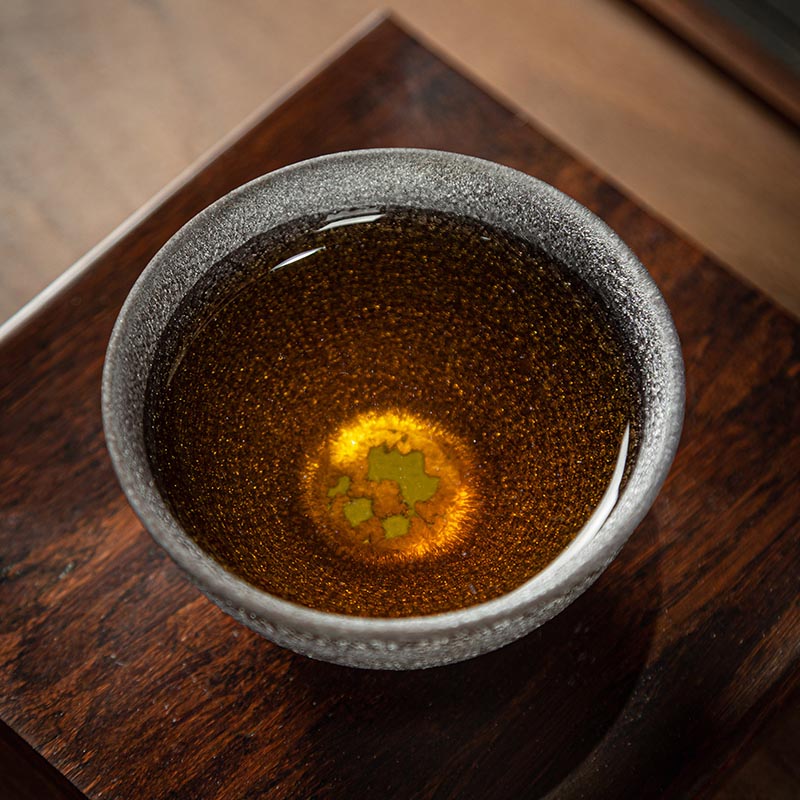
Porcelain teapots follow a different logic. The material is less forgiving in the hand but more transparent in the cup. A thin white porcelain pot shows you nothing on the outside, but it reveals the liquor clearly when poured into matching cups. Porcelain does not absorb aroma the way unglazed clay does. You can brew green tea in it one day and yancha the next without the flavors tangling. The lids tend to be lighter, the rims sharper. When you set the lid down after emptying the leaves, it makes a clean, bright sound against the tray, different from the muted tap of clay.
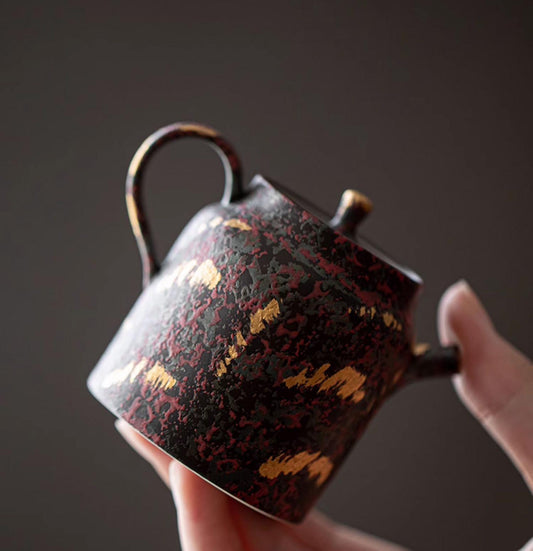
There are also taller, more cylindrical pots often used for black tea or fragrant dancong, where vertical space gives the leaves room to rise and fall. And there are flatter, wide mouthed pots that make it easy to tuck in large twisted oolongs by hand without breaking them. The size of the opening matters more than people expect. A narrow mouth can make it frustrating to empty spent leaves. A wide one makes cleanup simple but demands a well fitted lid so it does not rattle when you pour.
Some styles are really about the handle. A high, rounded handle gives you more clearance from the hot body. A smaller, tighter handle looks elegant but can feel cramped if your fingers are thick or if the pot is very hot. After a few sessions, you learn which handles let you tilt the pot confidently and which make you hesitate.
There is a style of pot meant for side handled pouring, more common in parts of southern China and also seen in Japan. The side handle changes your wrist movement. Instead of lifting and tipping from above, you rotate from the side. It can feel awkward at first, but once it becomes natural, the motion is smooth and economical.
None of these styles are better in the abstract. They settle into your routine based on the teas you drink and the way you brew. I have a small, plain Yixing pot that is almost unremarkable on a shelf. The clay is a muted brown, the knob simple, the surface uncarved. But the balance is exact. When I pour, the stream runs straight and quiet, and when I stop, it stops completely. After years of use, the surface has taken on a soft sheen from rinsing and handling. It is not dramatic, but it feels right in the hand in a way that a more ornate pot never quite did.
Styles of teapots are often described in catalogs as categories to collect. In practice, they are tools that either fit your brewing or do not. You notice the lid that settles with a soft click, the spout that does not dribble, the body that cools just slowly enough. Over time, the style becomes less about appearance and more about how naturally your hand reaches for it when the water is ready.