An English Tea Strainer Belongs on Every Gongfu Tray for Better Brewing
An English tea strainer looks almost out of place on a gongfu tea tray. The classic form, a small handled cup of fine metal mesh that rests over a teacup, belongs to a different brewing habit: a big pot on the table, leaves left to roam freely, tea poured once and finished slowly. In Chinese tea practice, especially gongfu brewing, we usually control the leaves inside a small teapot or gaiwan and decant fully into a fairness pitcher. Ideally, nothing solid makes it into the cup.
And yet, I keep a strainer on my tray.
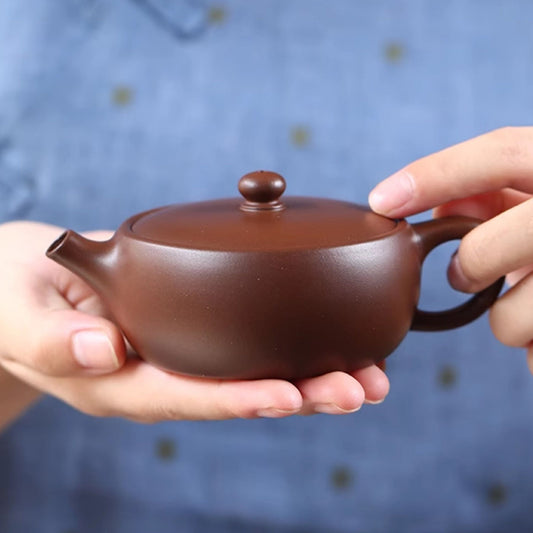
In gongfu brewing, even with a well-made Yixing pot or a porcelain gaiwan, fine fragments slip through. Rolled oolong unfurls and sheds tiny particles. Broken edges of aged sheng pu’er drift toward the spout. If the teapot has a simple single-hole filter rather than a tight multi-hole or ball filter, those fragments follow the pour. They collect in the last cup, often the one poured for yourself.
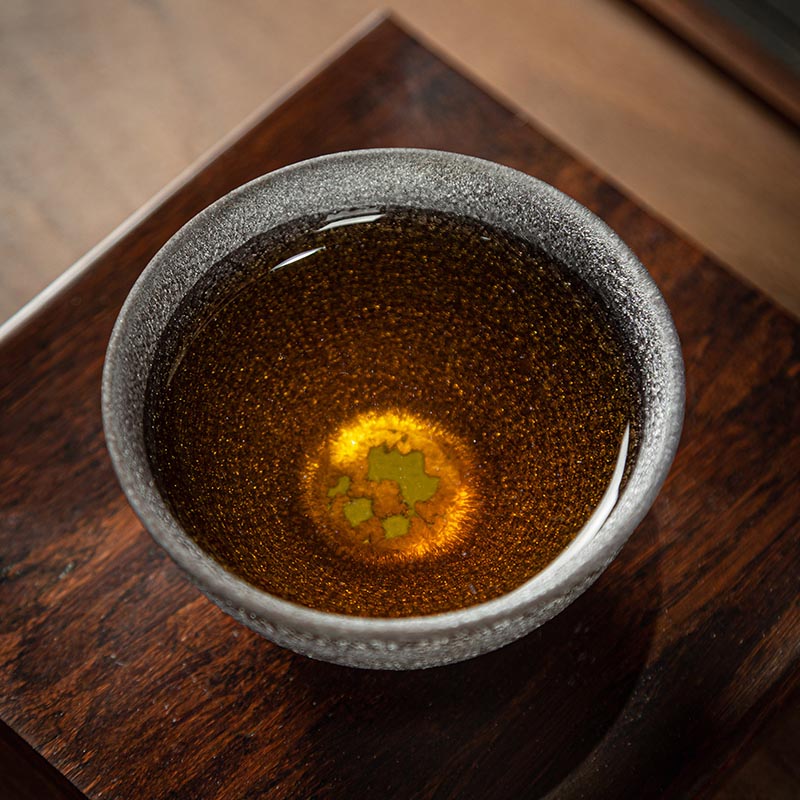
A small strainer resting on top of the fairness pitcher or balanced over a cup solves this quietly. It is not dramatic. It does not change the character of the tea. It simply keeps the surface of the liquor clear. When you are tasting carefully, especially in a group, clarity matters. You notice color more precisely. You feel texture without distraction. The finish is cleaner.
The English-style strainer is usually stainless steel or sometimes silver. The mesh can be very fine, almost fabric-like, or slightly more open. The difference matters. Too fine, and the pour slows down and pools, cooling the tea more than you want. Too open, and you catch nothing at all. A good strainer allows a steady stream from the fairness pitcher without splashing. It should sit securely, not wobble, and be easy to lift with one hand while holding the pitcher with the other.
There is a small, satisfying sequence in using it. Teapot to fairness pitcher in one continuous pour. The sound shifts as the last of the liquor runs through the clay and hits the empty glass or porcelain. Then pitcher to cups through the strainer. The mesh darkens with moisture. Tiny flecks collect. When you tap it gently against the rim before setting it down, there is a soft metallic ring that contrasts with the muted sound of clay on wood.
It is a different feeling from using a built-in ceramic strainer inside a gaiwan lid. Porcelain against porcelain is quiet and precise. Metal mesh has a lightness and a faint give under heat. After a session, when you rinse it under hot water, you can feel the warmth run quickly through the handle. It cools almost immediately. There is nothing absorbent about it. No patina forms, no gradual seasoning the way unglazed Yixing clay darkens where your thumb rests. It remains what it is.
That lack of transformation is sometimes why people overlook it. In Chinese tea ware, we pay attention to clay texture, lid fit, spout alignment, the way a pot empties in a clean, unbroken line. A handmade teapot can improve with use. The body takes on a soft sheen from handling. The lid settles more comfortably as you learn its angle. A porcelain cup, thin at the lip and slightly flared, changes how the tea meets your mouth.
A strainer does not evolve. It either works or it does not.
Still, its design has its own quiet standards. The rim should be smooth, with no sharp edges where the mesh meets the frame. Cheap ones catch on a cup’s glaze or feel rough against the fingers. The handle should be long enough to stay cool and stable, but not so long that it throws off the balance when resting over a small cup. Some have two small hooks opposite the handle so they can sit across a pitcher without slipping. That detail is easy to appreciate when you are pouring quickly during short infusions.
In more traditional Chinese setups, especially in tasting rooms or formal tea evaluations, you often see a fine metal strainer placed over the fairness pitcher. This is not English in origin, but the function is similar. It catches broken leaf and foam before the tea reaches the cups. The presence of a strainer does not mean the teapot is inferior. Even very fine handmade pots cannot stop the smallest particles, especially with compressed teas.
For everyday home brewing, I find the English-style handheld strainer more flexible. It can move from cup to cup. It can be set aside when brewing whole, intact leaves that do not shed. It is easy to rinse and dry. There is no worry about staining or odor. Unlike porous clay tools, it does not absorb the character of different teas, so you can use it for roasted oolong in the morning and young sheng in the afternoon without hesitation.
It also reminds me that tea practice is practical before it is aesthetic. We can admire a beautifully thrown Yixing pot, check the lid fit with a gentle tilt, watch the pour arc cleanly into the pitcher. But if the final cup is full of grit, the pleasure drops. The strainer is a small corrective, almost invisible once you are used to it.
I have seen people resist using one because it feels less authentic, as if it belongs to a British drawing room rather than a Chinese tea table. That seems unnecessary. Tea culture has always absorbed useful tools. Porcelain itself moved across borders. Kettles, trays, and cups changed shape over time in response to use. If a simple mesh strainer helps you present a clearer cup during a gongfu session, it has earned its place.
At the end of a long session, when the tray is wet and the leaves are piled high in the spent bowl, the strainer is one of the easiest things to clean. A quick rinse, a shake, a light tap on the sink edge. It goes back to its spot beside the fairness pitcher. Plain, functional, and ready for the next pour.