The Natural Color Changes of a Yixing Teapot Over Time and Use
The first time someone sees a Yixing teapot “change color,” they often assume it has a special glaze or some kind of reactive surface. In most cases, it doesn’t. What they are noticing is zisha clay responding to water and use.
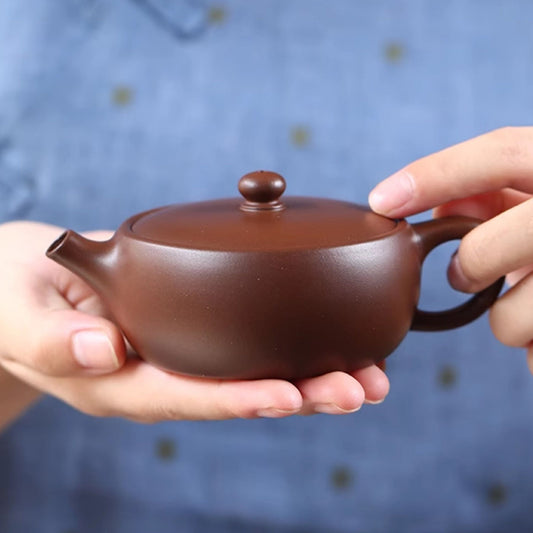
When dry, a good Yixing pot can look almost muted. The surface is matte, sometimes even a little dusty in tone. Pour hot water over it and the color deepens immediately. A reddish clay turns a darker chestnut. A purple-brown clay shifts toward ink. The surface seems to wake up. As the water evaporates, it slowly returns to its quieter shade.
That temporary change is just moisture darkening unglazed clay. The more interesting transformation happens over months and years. With regular brewing, especially in gongfu sessions where you rinse the pot, pour over it, handle it often, the clay develops a soft sheen. Not a glaze, not a shine in the porcelain sense, but a low luster that catches light along the curve of the shoulder and the lid knob. The color grows deeper and more even. A pot that once looked dry and sandy begins to look saturated.
This is not magic. Zisha clay is slightly porous. Tea oils and minerals from water settle into the surface. Your hands contribute as well. The side where your thumb rests while you pour often becomes smoother first. Around the lid, where steam escapes and condenses, the tone can shift more quickly. If you brew darker teas like shu pu’er or roasted oolong, the effect is usually more visible than with a very light green.
What matters most is use. A teapot that sits on a shelf does not change much. One that is used daily does. I have a small, pear-shaped pot that I use for yancha. When I first bought it, the clay was a cool brown with a faint gray cast. The surface felt dry, almost powdery. After years of brewing, it has a warmer tone. When I run my fingers across the body, there is a subtle smoothness, especially near the handle and along the curve of the spout. It still looks like clay, not lacquered or polished, but it holds light differently now.
The change is gradual enough that you rarely notice it day to day. It becomes obvious only when you compare an old pot to a new one of the same clay. The new pot looks flat. The used one looks settled.
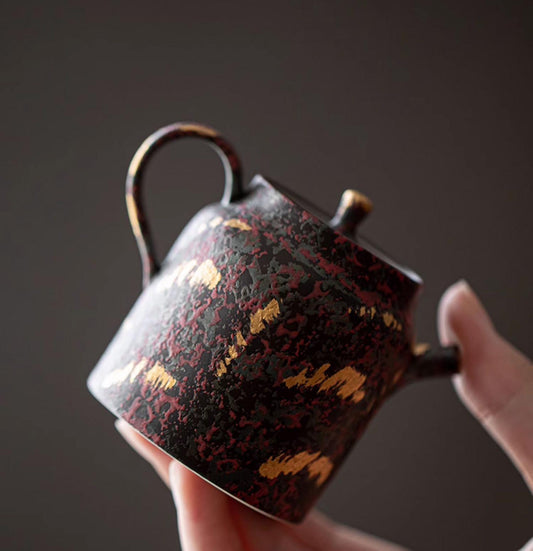
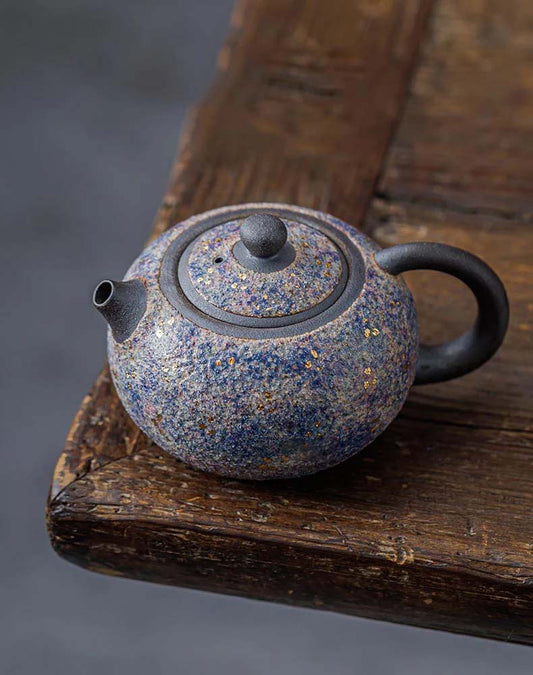
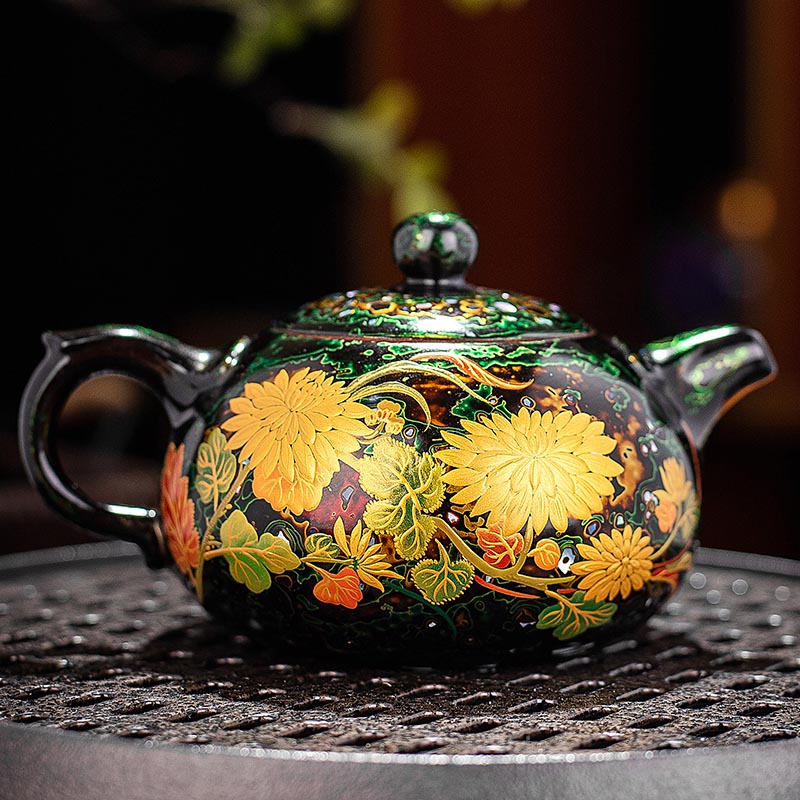
There are also teapots made to change color more dramatically, sometimes with heat-sensitive glazes that reveal patterns when hot water is added. These can be playful. The dragon appears when you pour, the calligraphy darkens, then fades as the pot cools. They have their place, but they belong more to novelty than to long-term tea practice. The change is on the surface, driven by a coating. It does not come from interaction between clay, tea, and handling over time.
With unglazed clay, the transformation is tied to brewing function. A well-made Yixing pot is built for repeated infusions. The lid fits closely, often with a soft, precise resistance when you rotate it into place. When you pour, you place a finger on the lid to keep it steady. The spout should send out a clean, focused stream, not a dribble. If the balance is right, the pot empties quickly and cleanly, which matters in gongfu brewing where seconds change the taste.
As you brew and pour, you rinse the pot with hot water. You might pour leftover tea over the outside at the end of a session. Water runs down the sides, pools briefly at the foot, then disappears into the tray. Over hundreds of sessions, that simple routine leaves its trace. The clay absorbs, releases, darkens, evens out. The color change is a record of function.
You also learn that not every change is desirable. If you handle the pot with oily hands, the surface can become blotchy. If you leave tea leaves inside overnight too often, the interior may develop an off smell that takes time to clear. Care matters, but it is not delicate in the way porcelain can be. A Yixing pot can take heat, constant use, and even minor knocks without complaint. Its evolution depends on that contact.
The visual shift is only part of it. The surface feels different. Early on, when you lift the lid, you might hear a faint scrape of dry clay against clay. After years, the movement can feel smoother, almost cushioned. The knob becomes more comfortable under the fingers. Even the act of wiping the pot dry at the end of a session feels different. The cloth glides more easily over a seasoned surface.
Some people try to accelerate this process, polishing their pots with cloths, rubbing them deliberately to force a shine. I have never found that satisfying. The most convincing color change comes from ordinary brewing. Set the pot on the tea tray. Warm it. Add the leaves. Pour water. Decant fully into a fairness pitcher. Repeat. Over time, the clay responds.
There is something grounding about watching a pot change in this slow, practical way. It is not a dramatic transformation. No hidden image appears. Nothing sparkles. But if you pay attention, you see how use alters matter. The teapot becomes less anonymous. The color shift marks hours of tea poured, conversations had, solitary mornings, rushed afternoons.
If you are curious about a Chinese teapot that changes color, look first to unglazed clay and to your own habits. The change is not a trick. It is the surface learning your hands and your tea.