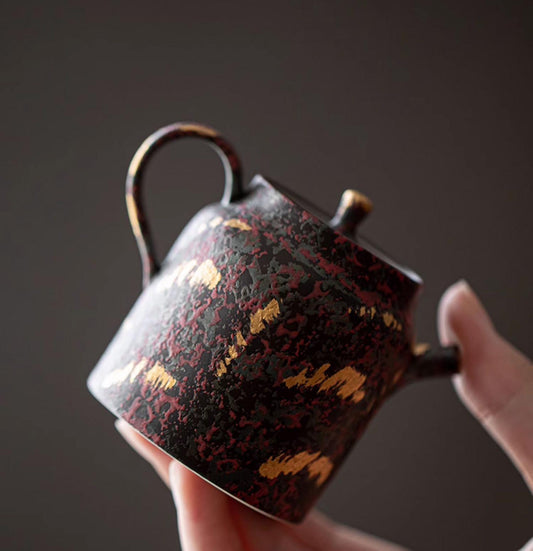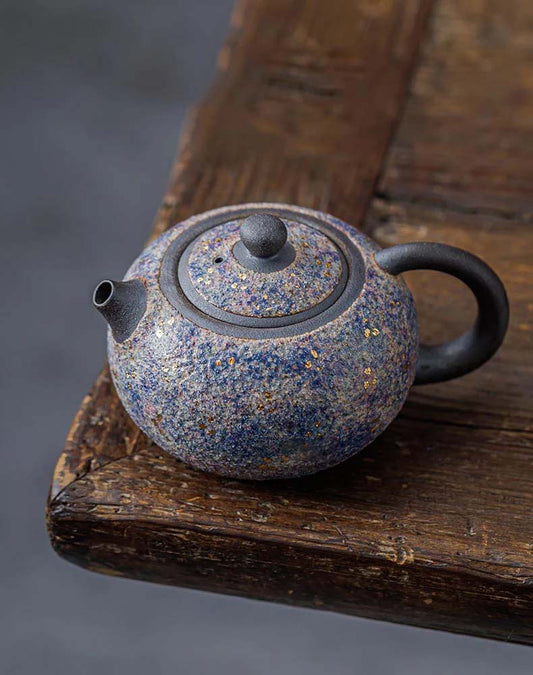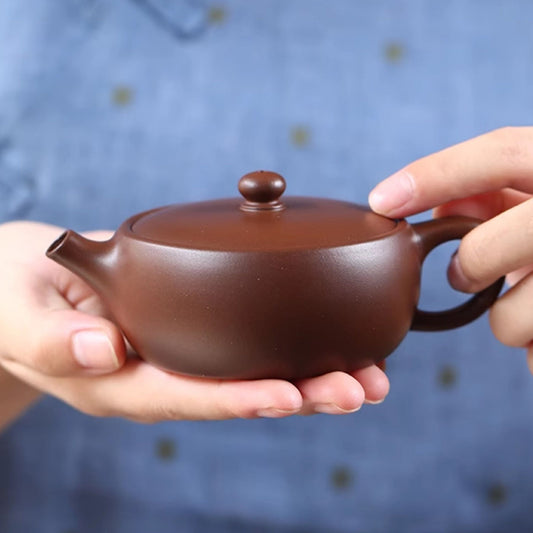
The Solid Feel and Smooth Pour of Antique Pewter Teapots
Antique pewter teapots tend to surprise people who are used to thinking in terms of Yixing clay or porcelain. Pewter sits somewhere else entirely. It has a muted, gray surface that doesn’t announce itself from across the room. It feels cool and slightly soft under the fingers, with a density that is different from both clay and silver. When you lift one, especially an older piece, there is a quiet solidity to it. Not heavy in a clumsy way, but steady.
In Chinese tea practice, pewter was never the dominant material for brewing fine tea the way Yixing was for oolong or porcelain for green tea. But pewter teapots did have a place, especially from the late Ming through Qing periods, often valued for their restrained appearance and their ability to hold heat. Some were used for brewing, others for heating water gently over charcoal, and some functioned more as elegant service vessels. The line between those uses was not always rigid.
What draws me to antique pewter teapots is how direct they are. The metal allows for thin walls without fragility. Compared to clay, pewter can be worked into crisp edges and precise planes. The lids often sit very flush, sometimes with a subtle, almost frictionless fit. When you rotate the lid gently, there is a soft metallic whisper rather than the ceramic rasp of clay on clay. If the pot has been used well, the lid and body will have worn into each other slightly, and the fit becomes smoother over time rather than looser.
The pour tells you quickly whether the pot was made by someone who understood tea or simply metalwork. A well-made pewter teapot will have a spout that aligns cleanly with the body, neither drooping nor flaring awkwardly upward. When tilted, the stream can be surprisingly fine and controlled. Because pewter is heavier than clay, the balance matters even more. If the handle is poorly placed, the pot will feel nose-heavy as soon as it fills with water. In a good piece, the center of gravity shifts smoothly as you tilt, and the wrist does not have to compensate.
Heat retention is where pewter behaves differently from what people expect. It conducts heat quickly, so the outer surface warms fast. You feel it immediately through your fingers. But because the metal walls can be thin, the pot does not insulate in the way thick clay does. For gongfu brewing, where infusions are short and precise, this can be useful. The water temperature drops in a more responsive way between infusions. For delicate oolongs or aged white teas, that slight moderation can produce a softer extraction. With green tea, I am more cautious. The metal’s quick heat transfer can push the leaves too hard if the water is too hot.
Older pewter often develops a low, satin sheen from handling. It is not the bright polish of new metal. It looks almost like river stone that has been smoothed by years of touch. If the pot was actually used for brewing tea rather than displayed, the interior may show faint staining. Pewter does not absorb flavor the way Yixing clay does, but repeated contact with tea and hot water leaves a subtle trace. I have opened antique pewter pots and found a faint, dry scent that suggests they were not merely decorative.
Decoration varies widely. Some antique pewter teapots are elaborately engraved with landscape scenes, calligraphy, or floral motifs. Others are almost severe in their simplicity, with only a slight ridge at the shoulder or a gently faceted body. I tend to prefer the quieter examples. The clean planes and understated surfaces make the proportions easier to read. You notice the relationship between the lid knob and the body, the thickness of the spout base, the curve of the handle. In tea practice, those small relationships matter more than the engraved story on the side.
In a gongfu setting, a pewter teapot changes the visual field. Surrounded by porcelain cups and a clay fairness pitcher, the pewter sits with a soft luster that absorbs light rather than reflecting it sharply. When steam rises around it, the surface darkens slightly, becoming more matte. After a session, if you leave it on the tea tray to cool, faint water marks appear and then fade as the metal dries. It asks for simple care. Rinse, dry thoroughly, avoid harsh polishing that would strip away the accumulated surface.
Cleaning is straightforward, but it is not something you ignore. Pewter can dull if left wet for long periods. I wipe mine dry with a soft cloth, paying attention to the seam where the handle joins the body. Antique joints, often soldered, should not sit in moisture. These are practical considerations, the kind that determine whether a piece remains usable or slowly becomes shelf-bound.
Compared to Yixing, pewter does not “season” in the same way. It does not take on a deepening patina from tea oils that alters the flavor of future infusions. This makes it more flexible if you like to brew different types of tea in the same vessel. But it also means the relationship between pot and tea is less cumulative. The personality of the tea remains in the leaves and the water, not in the metal.
What I appreciate most is how an antique pewter teapot can feel both formal and unassuming at once. It does not demand the same careful pairing that a prized Yixing pot might. You are less likely to worry about dedicating it to a single cultivar. At the same time, its weight and presence encourage attention. When you lift it, you feel the heat quickly and adjust your grip. When you pour, you notice the angle more acutely because the metal gives immediate feedback.
Not every antique pewter teapot is worth brewing with. Some were clearly made as display pieces, with overly narrow spouts or lids that rattle slightly. Others have been repaired in ways that make them better suited to admiration than daily use. The difference becomes obvious only when you fill them with hot water and try to pour. The stream either holds steady or breaks. The lid either stays in place or chatters.
When I set one on the tea tray alongside clay and porcelain, I do not think about historical categories. I think about how it feels in the hand that day. On a cool afternoon, brewing a darker oolong, the quiet weight of pewter can feel exactly right. It is not dramatic. It does not transform the tea into something else. It simply changes the way the hand and heat meet for a few minutes, and that is enough.