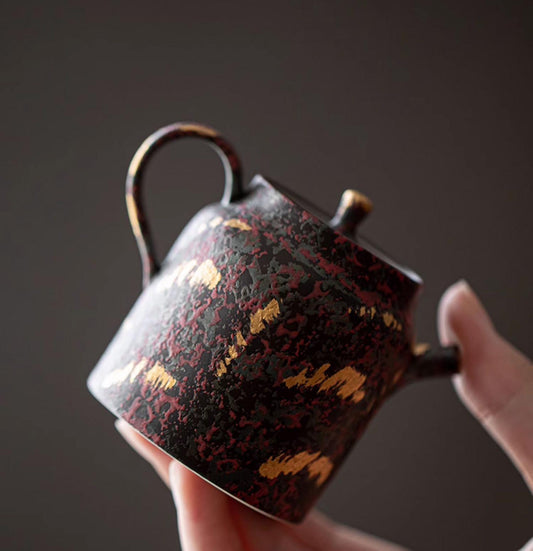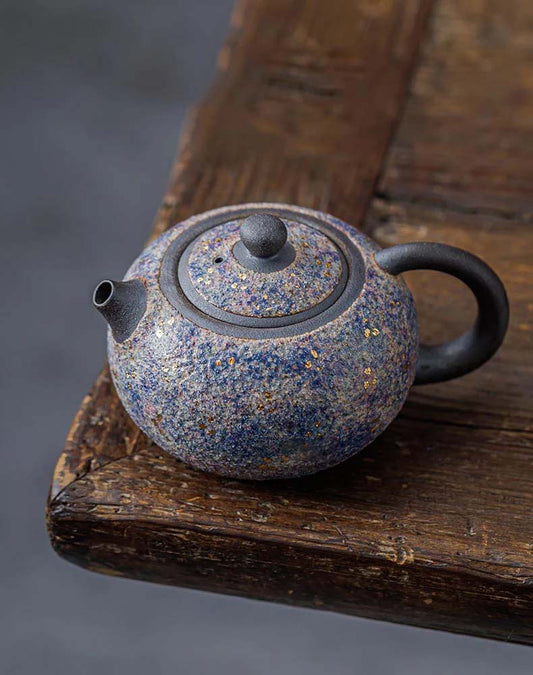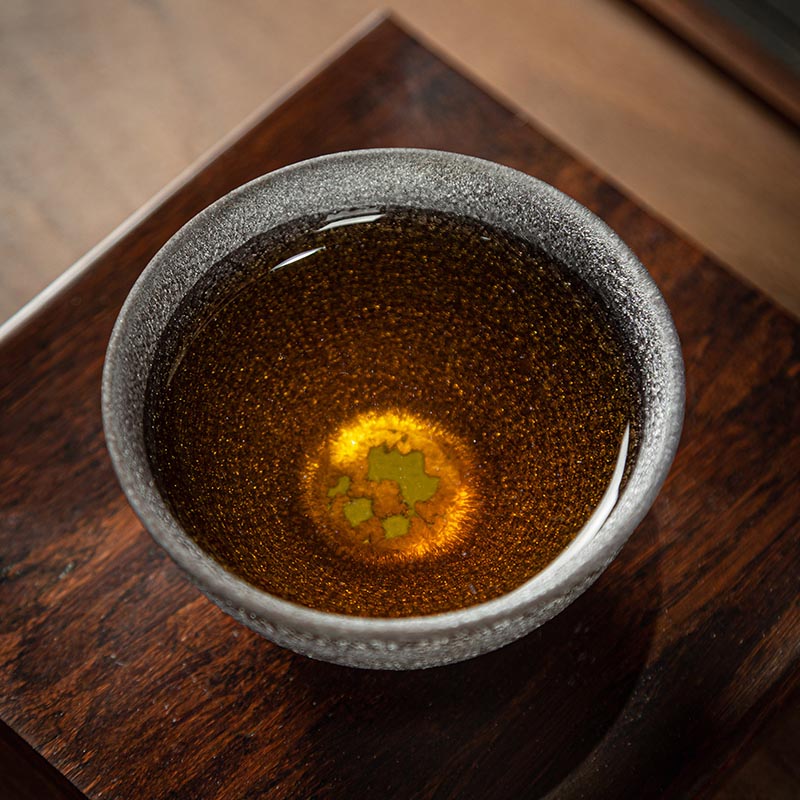
Judging a Chinese Teapot’s Quality by Feel, Balance, and Pour
A Chinese teapot is easy to misunderstand if you only see it sitting dry on a shelf. In the hand, with hot water moving through it, it becomes something else entirely.
The first thing I notice with any pot is its balance when it’s filled. An empty teapot can feel perfect, then tip awkwardly once it holds water. A good one stays centered. When you lift it by the handle and tilt it forward, the weight of the water should feel supported, not pulling away from your wrist. The spout should line up cleanly with the body, so the stream comes out steady and direct. In gongfu brewing, where you pour quickly and often, this matters more than decoration.
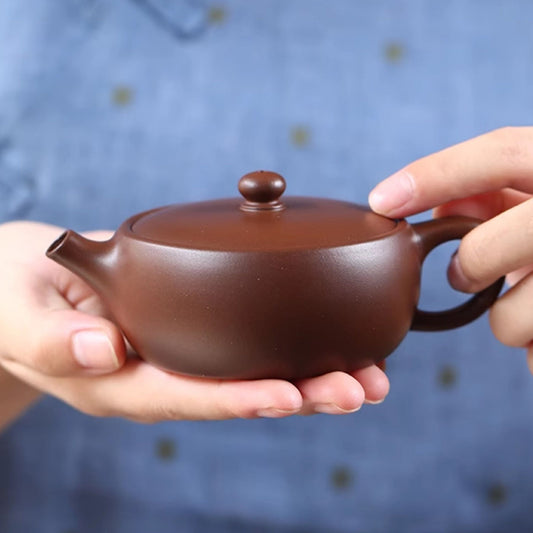
With Yixing clay, the feeling is dry and almost sandy when new. It warms quickly in the hand. The lid usually fits with a quiet, slightly resistant glide, and if the fit is precise, you can place a finger over the steam hole and feel the seal hold for a moment as you pour. That snugness is not about showing off technique. It controls the pour and prevents dribbling down the front of the pot. A clean stop at the end of the pour is one of the small satisfactions of a well-made teapot.
Unglazed clay also changes with use. After months of brewing oolong or pu-erh in the same pot, the surface develops a softer sheen. Not glossy, not polished, just a gentle darkening where the fingers rest and where tea has been poured over the body. It reflects handling more than intention. You begin to recognize the pot not just by shape but by the way it feels slightly warmer and smoother than it did at the beginning.
Porcelain teapots behave differently. The glaze is cool and glassy, especially before you rinse it with hot water. Porcelain does not absorb tea oils, so it keeps flavors clearer and is easier to clean. I reach for porcelain when I am comparing teas side by side. The lid tends to make a light clicking sound when set in place, sharper than clay. Under soft light, the glaze can show tiny variations in thickness near the foot ring or around the base of the spout. These details are subtle, but they tell you how the pot was fired and handled.
Wall thickness matters more than most people expect. A thin-walled porcelain pot loses heat quickly, which can be useful for green tea. A thicker Yixing pot holds heat for roasted oolongs. You feel this when you cradle the pot after the first infusion. Some stay almost too hot to touch; others cool just enough to handle comfortably. Over the course of several infusions, the difference changes the pace of brewing. With higher heat retention, you move more decisively. With thinner walls, you may linger a little longer between pours.
The handle is often overlooked until it becomes uncomfortable. A good handle leaves enough space for two or three fingers without crowding. It should not force your wrist into an awkward angle when you pour. In small gongfu pots, the handle and spout need to balance visually, but more importantly they need to balance physically. If the spout is too short or too narrow, the tea dribbles. If it is too wide, the pour can feel uncontrolled. When everything is aligned, the stream arcs cleanly into the fairness pitcher, and you can stop it without a trailing drip running down the body.
There is also the matter of the lid. In daily use, you lift and replace it dozens of times. A lid that rattles slightly can become irritating. One that fits so tightly you have to wiggle it loose with wet fingers is no better. The best lids settle with a soft, precise sound, almost like a ceramic note. During brewing, you might tilt the lid slightly to release more heat or to allow the leaves to breathe between infusions. These small adjustments become habits, shaped by the pot itself.
Cleaning is not romantic, but it is part of the relationship. Unglazed clay is usually rinsed with hot water only, no soap, then left open to dry completely. If you close it while still damp, a stale smell can develop. Porcelain can be washed more thoroughly, though harsh scrubbing dulls the glaze over time. Tea stains gather around the inner lip and near the filter holes inside the spout. Some people polish the exterior of clay pots with a tea cloth after each session. Others let the marks accumulate naturally. Both approaches show up clearly on the surface.
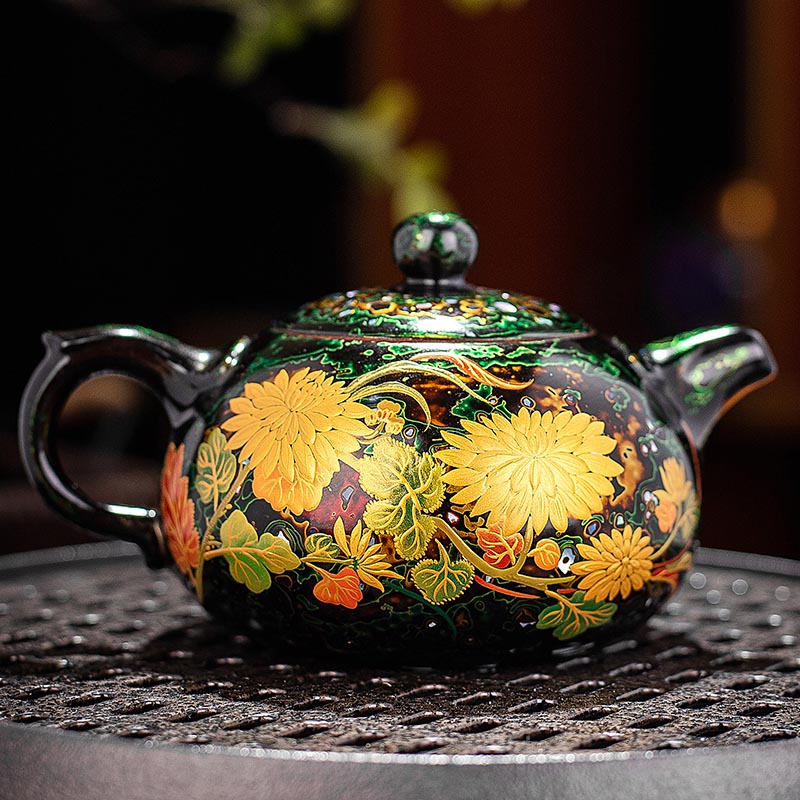
A teapot admired from a distance can be impressive, with carved decoration or an unusual silhouette. But the pots that stay in regular rotation are often simpler. Proportion, lid fit, the way the spout cuts the stream, how the body feels after years of heating and cooling. These are the qualities that reveal themselves slowly.
When I set up for a session, arranging the pot beside the cups and the fairness pitcher, I do not think about symbolism. I think about whether the pot suits the tea I have chosen and whether it will pour cleanly into small cups without rushing. Once the water hits the leaves and the first infusion fills the pot, the teapot stops being an object to evaluate. It becomes part of the rhythm of brewing, lifted and tilted, emptied and refilled, warming and cooling in the hand.
By the time the leaves are spent, the pot is damp, slightly fragrant, and warm at its base. It looks less composed than it did at the beginning. That is usually when it feels most itself.